

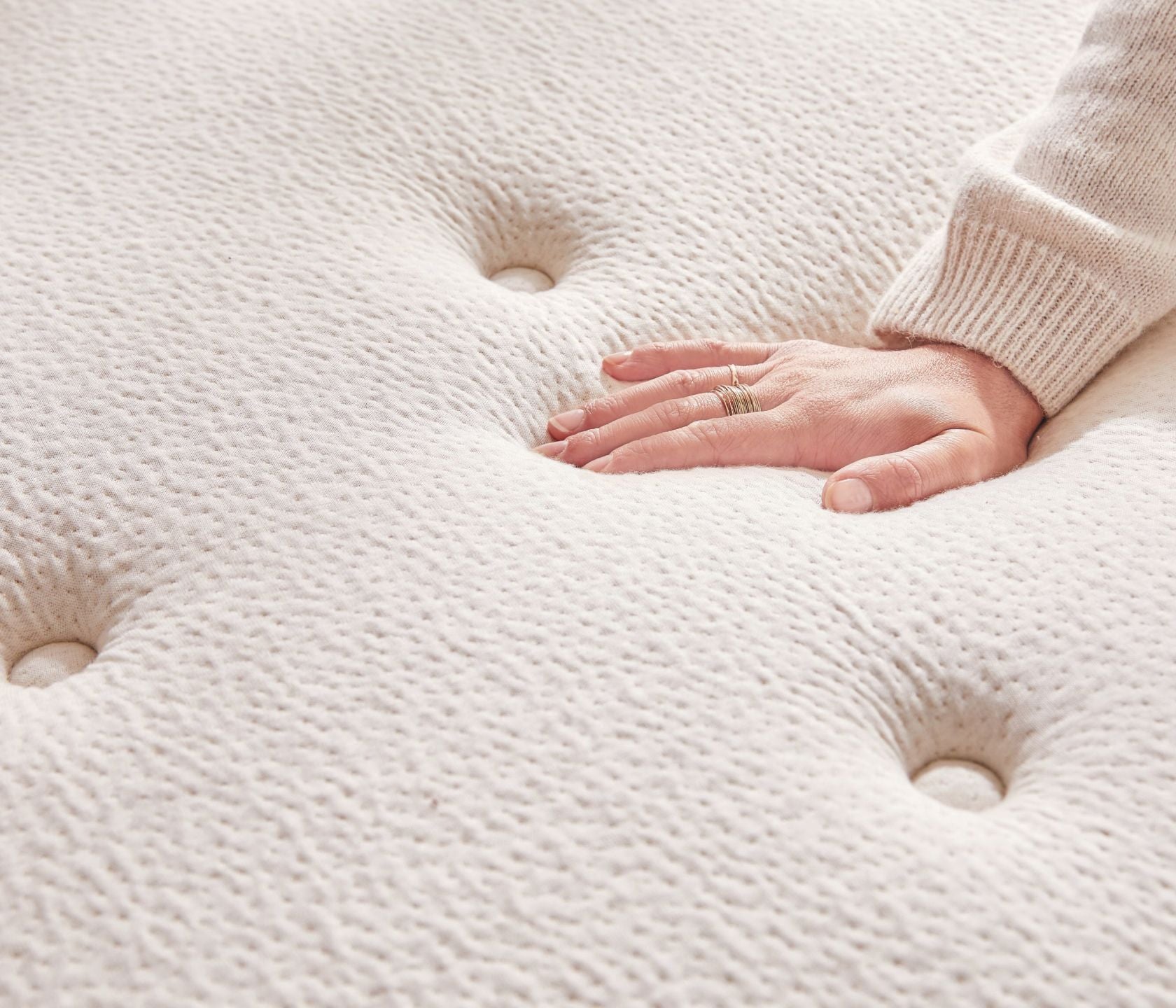
Proper mattress care is essential for maintaining comfort...
Bedding in poor condition is a surefire way to ensure poor-quality sleep. However, it doesn’t take magic to fix this. What you need is effective bedding care. What are some tips for proper mattress care? Find the answers below.
Ventilate the room as much as possible
Air out a room—that’s part of keeping it clean. But in addition to circulating and refreshing the air in a room, this practice also helps keep your mattress in good condition. It’s an effective way to eliminate dust mites that might find their way into it, especially on the mattress and bedding.
Insufficient ventilation will encourage the growth of these pests, because even though they live for less than two months, they reproduce quickly. This is far from ideal if you want impeccable hygiene.
Leaving one or more windows open for a quarter of an hour a day is the minimum required to keep your mattress in good condition. But if you can leave them open longer, by all means do so!
Air out the mattress
Air out your bedroom every day—that’s a good start. But it’s not enough to completely get rid of dust mites. Airing out your bedding is also essential for effective mattress care.
To start with, feel free to vacuum it as often as you can. It’s a relatively simple method, although it does require a little time.
Also, remember to air out your mattress in the open air to let it breathe. From time to time, let it soak up some sunlight to remove any traces of moisture. Sunlight is good for bedding and can eliminate any dust mites that might be present in about ten minutes.
Should I flip the mattress?
This is a simple step, but it’s not mandatory and is ideal for proper mattress care. Many people still don’t do it, yet it’s highly recommended formattress care, especially for synthetic mattresses.
Flipping the mattress helps extend its lifespan, especially for mattresses that wear out quickly, such as synthetic mattresses (polyurethane, memory foam, synthetic latex, etc.), and this practice also helps ensure guests' comfort by preventing uneven sagging.
For new synthetic mattresses, it is recommended to flip them once or twice a month for two months. Otherwise, this should be done at the start of each season, or about every 3 months.
- In January, simply rotate the bedding from head to toe.
- At the end of March, flip the mattress over and enjoy a cooler side if your mattress has a "summer" side.
- In July, rotate it again from head to toe.
- Then, when winter arrives, turn it over again to take advantage of the winter side—if it has one—and get a little extra warmth.
If your mattress is too heavy, or if you prefer the comfort of the other side, you can simply flip it over—head to toe!
As for natural latex mattresses, there is no need to flip them thanks to their high breathability and extended durability.
Wash your bedding regularly
It goes without saying that, for proper mattress care, it’s essential to keep your bedding spotless. This obviously means keeping your sheets, duvet cover, and pillowcases clean. Even if they look pristine after several weeks, dust mites will have had time to settle in.
Bed linens should therefore be washed weekly or at least twice a month to ensure impeccable hygiene.
Duvets require special care because they are bulky and, depending on the materials used, can only be cleaned by a professional. This is especially true for down or feather duvets, which must be taken to a dry cleaner. For duvets that are machine-washable, you’ll still need to check that the machine can handle their weight and size.
To prevent these little pests from infesting other linens and clothes, you must absolutely avoid washing them together in the washing machine.
Washing Pillows
While the topic of bedding was discussed earlier, bedding isn’t the only item used in a bed. There are also pillows. Just like everything else, you’ll need to make sure the pillows you use are clean, and the only way to do that is to wash them.
Just like with the comforter, anything made of feathers or down goes straight to the dry cleaner. The rest can be machine-washed, but be sure to follow the washing temperature instructions exactly. Finally, to keep them from losing their loft, wash them with the sheets.
Removing Stains from the Mattress
Comprehensive mattress care includes stain removal. While airing out the mattress solves the problem of dust mites, and flipping the mattress regularly prevents it from sagging, you mustn’t forget about stains.
To do this, use a mild cleaner and lukewarm water to avoid damaging the mattress. If you have an organic mattress, there are cleaners specifically designed for it. If you need to clean up a small bloodstain, simply replace the lukewarm water with cold water, and you’re all set!
Finally, the most durable mattresses are those with removable covers. Some mattresses come with a zippered cover that can simply be removed in the event of an accidental liquid spill, making maintenance easier. The cover on the Kipli natural latex mattress should be dry-cleaned.
We hope this article has been helpful to you.
Of course,
The Kipli Team