


The nightstand is one of the most common pieces of furniture in a bedroom—and one of the most underrated. It’s often chosen last, almost on autopilot, just to fill the space on either side of the bed. And yet, every night, it determines the quality of your sleep environment: Is your lamp within reach? Your book, your glass of water? Does the piece open up the space or make it feel cramped? Will it last ten years or sag in half that time? Choosing a nightstand means weighing several factors. This guide will help you understand them, one by one.
The Different Types of Nightstands
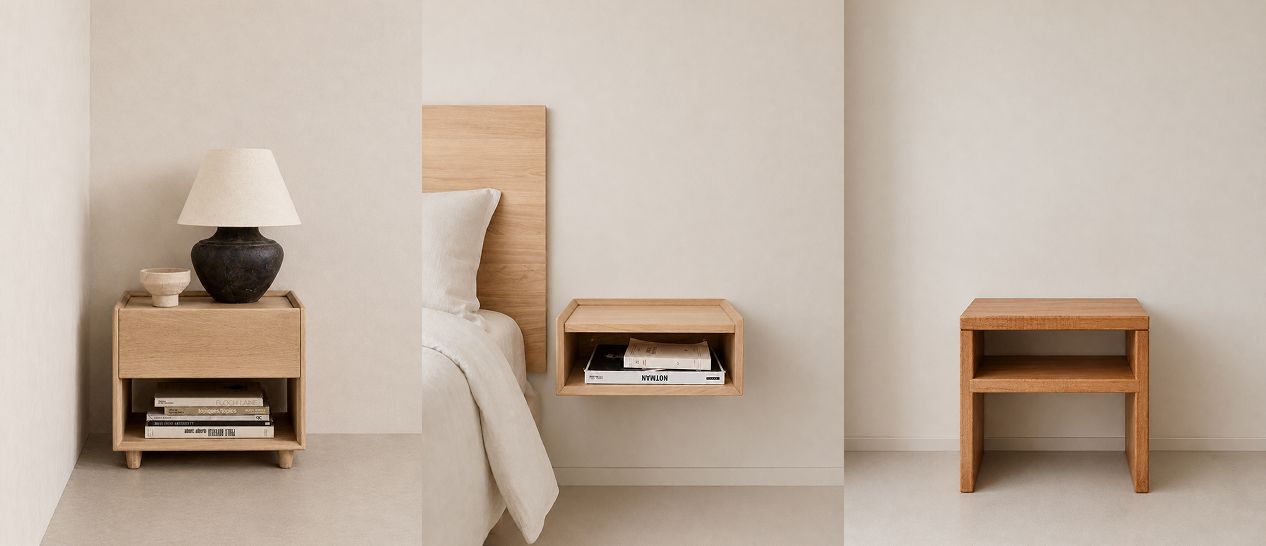
The first decision is often which size to choose. Depending on the layout of your bedroom, your decorating style, and your habits, not all options are equally suitable.
The solid wood nightstand
This is the most common and durable style. A solid-wood nightstand placed on the floor offers stability, durability, and a visual presence that engineered materials simply cannot match. Solid wood does not warp or sag, and it stands the test of time without going out of style. Provided, of course, that you choose a high-quality wood species and a safe finish.
Solid beech, such as that used in the AVA and NOVA models manufactured in Picardy, is prized for its density, wear resistance, and the warmth of its grain. Solid oak, used in the LIVIA line manufactured in Haute-Marne, is even denser: a noble wood well-suited to understated, minimalist interiors. Solid okoumé, as seen in the LUCA collection handcrafted in Turin, appeals with its natural brown hue and relative lightness, making it ideal for spaces where you don’t want to create a visually heavy feel.
The Hanging Nightstand
Wall-mounted nightstands are gaining popularity in contemporary bedrooms. By mounting directly on the wall, they keep the floor completely clear, create a sense of lightness, and make cleaning easier. This type of furniture is particularly well-suited to small spaces and minimalist-style bedrooms. The LIVIA wall-mounted nightstand, crafted from solid French oak in Haute-Marne with hand-finished details, embodies this design with its delicate lines and understated presence. It can be fitted with an optional drawer to meet your storage needs.
The small, functional nightstand with a shelf
A cross between a freestanding table and a wall-mounted unit, the nightstand with a shelf offers two levels of storage without taking up much floor space. The LUCA, featuring a shelf made of FSC-certified solid okoumé and handcrafted in Turin, includes a lower shelf 18 cm above the floor and an accessible top surface—ideal for those who need storage but prefer to avoid drawers.
Selection Criteria
Criteria for Choosing a Nightstand
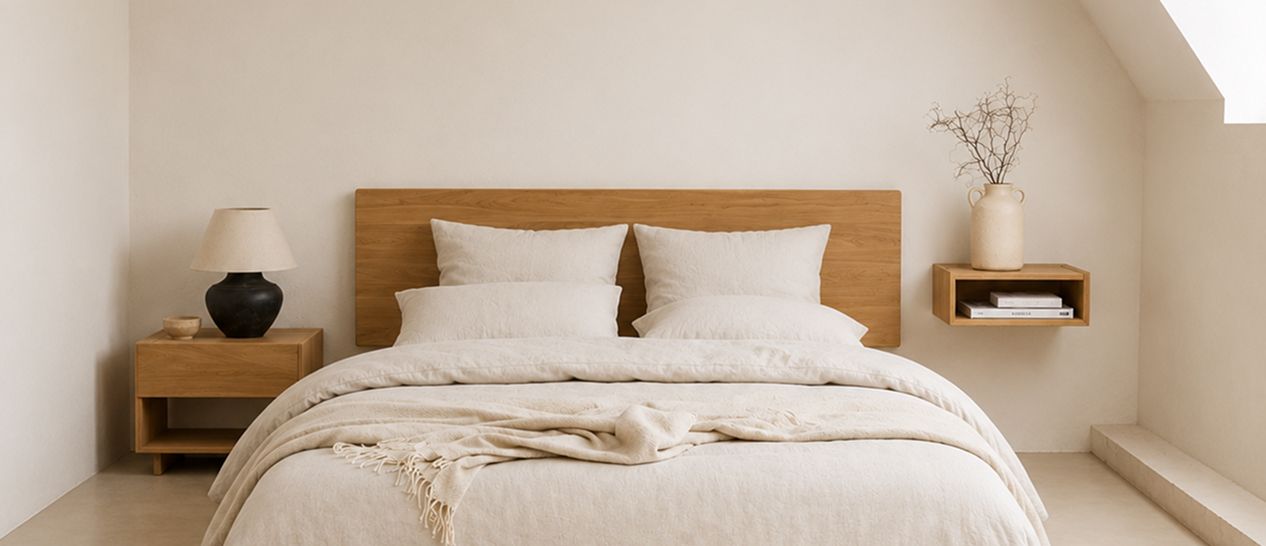
What size should your nightstand be?
A nightstand should not be wider than half the width of your mattress. In a standard bedroom, models between 35 and 50 cm wide fit easily without visually overwhelming the space. If it’s too large, a nightstand can overwhelm the space. If it’s too small, it won’t serve its functional purpose.
Depth matters, too: between 30 and 45 cm is a comfortable range. If it's less than 30 cm, you can't place a bedside lamp on it without it sticking out dangerously over the edge.
Height of the table relative to the headboard
The surface of the nightstand should ideally be at the same height as the top of your mattress, or slightly higher (up to 5 cm higher). This allows you to reach your lamp, book, or glass of water without leaning over or raising your arm.
A standard mattress is about 20 to 25 cm thick and rests on a box spring that is 30 to 40 cm high, for a total height of 50 to 65 cm. The AVA table is 36 cm high and is designed for use without a box spring or with a low box spring. The NOVA and LIVIA models are 40 cm high. Choose the model that best fits your actual setup.
Finishes and Materials to Consider
In a bedroom, the choice of materials isn’t just a matter of aesthetics. It’s also a matter of indoor health. Furniture made of engineered wood (particleboard, MDF, chipboard) can release volatile organic compounds (VOCs) from the adhesives and resins used in its manufacture, particularly during the first few years of use, in a room where you spend seven to nine hours a night.
Solid wood, treated with a VOC-free, water-based varnish or vegetable oil, does not have this drawback. It emits no pollutants, stores CO2 even after processing, and ages gracefully rather than deteriorating. Always check the actual composition of the furniture: the term “wood” on a label can refer to very different materials.
Key Points About Certifications
The PEFC or FSC label certifies that the wood comes from sustainably managed forests. The Bois de France label certifies that the wood is of French origin. These certifications guarantee the material’s full traceability, from the forest to the workshop. All Kipli solid wood models are certified.
Storage and Functionality
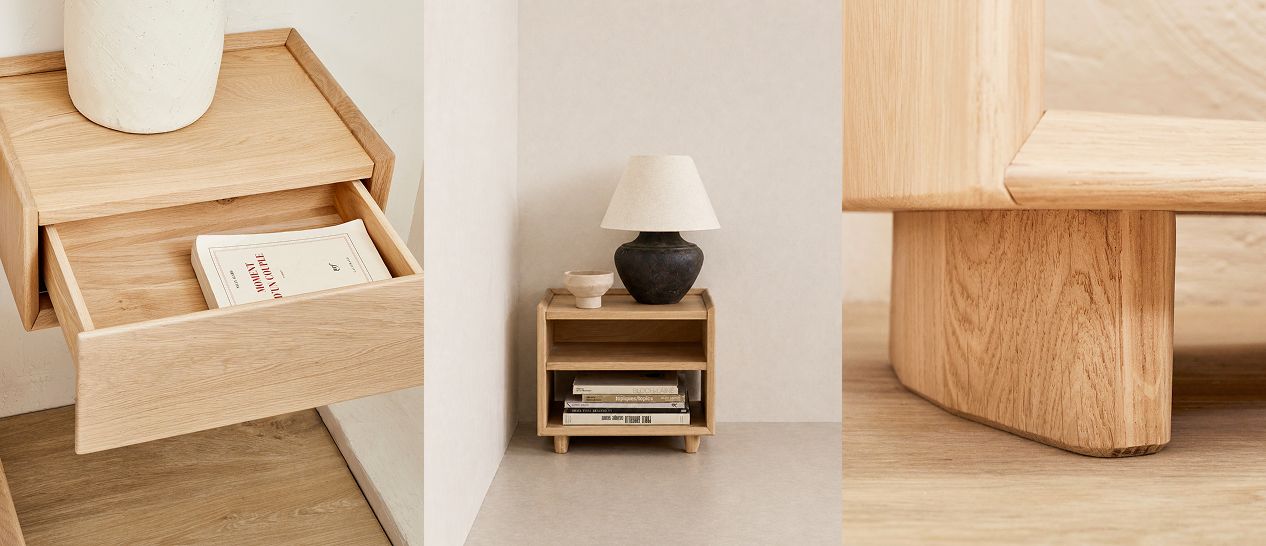
The Importance of Drawers in a Nightstand
A well-designed drawer can make a big difference in your daily life. It lets you store the things you don’t want to see but use every evening or every morning: medications, earbuds, lotions, and notebooks. Without a drawer, everything ends up on the countertop, and the space quickly becomes visually cluttered.
The quality of the drawer slides determines the drawer’s lifespan. The AVA and NOVA lines feature drawer slides with built-in brakes manufactured in Germany: they absorb the impact when closing without slamming and remain precise even after years of daily use. The LIVIA and LIVIA Wall lines offer drawers with an optional soft-close mechanism, which can be added as needed.
Choose a nightstand with built-in storage
In addition to the drawer, some models feature a low shelf or an open niche that provides extra storage space without a door. The LUCA with shelf offers two levels: an upper shelf for items used in the evening, and a lower shelf for items that don’t need to be accessed all the time. This design is particularly well-suited for readers and people who need space for multiple items.
Aesthetics and Functionality: Striking the Right Balance
The nightstand is one of the two most prominent pieces of furniture in a bedroom, along with the bed itself. It frames the sleeping area and directly contributes to the atmosphere you feel as soon as you enter the room or lie down.
A nightstand should blend in without dominating the space. In a bedroom decorated in natural tones, light wood such as beech (AVA, NOVA) brings a sense of lightness. In a more high-contrast interior, solid oak (LIVIA) or brown okoumé (LUCA) anchor the space with a more pronounced presence.
The clean, straight lines blend seamlessly into most contemporary interiors. Models with slender legs (NOVA) create a sense of visual lightness. Wall-mounted models (LIVIA wall-mounted) radically streamline the perception of space. Avoid buying a nightstand based solely on a photo against a white background: imagine it in your actual bedroom, with your mattress, your bedding, and your walls. The harmony between these elements matters more than any single piece on its own.
Tips for Choosing the Right Nightstand
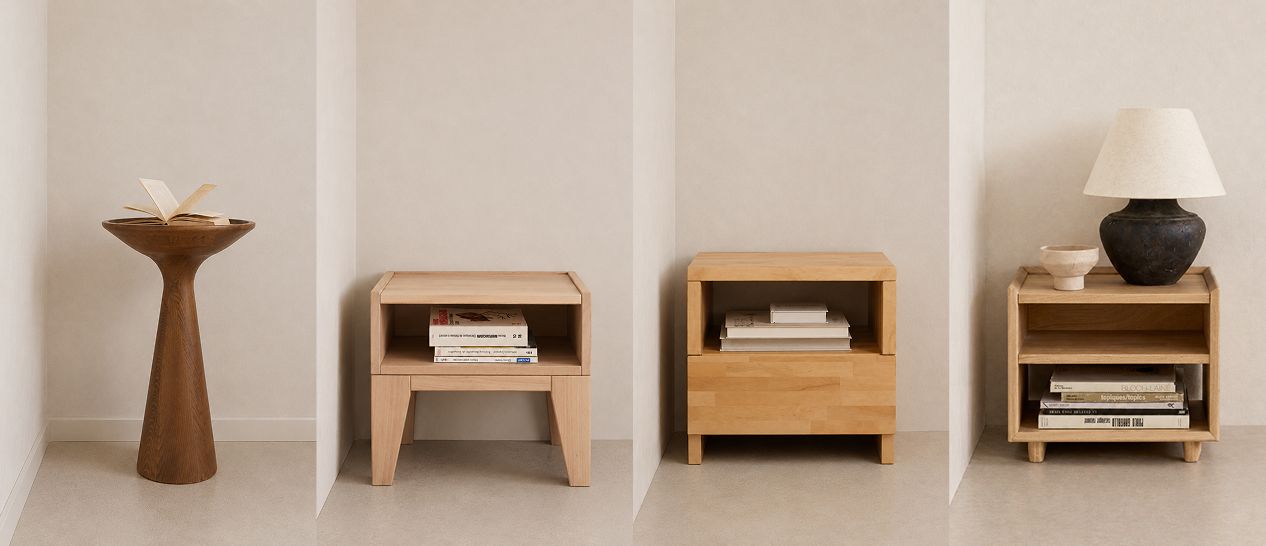
Determine Your Needs Before You Buy
Ask yourself two simple questions before making your choice. What do you put on your nightstand every night? And what do you want to keep within reach but out of sight?
- If you don't have many items to store but do a lot of organizing, choose a model with a drawer.
- It's easy to lay things out, but you rarely use it: an open shelf or a large surface without a drawer may be enough.
- Whether your room is small or you want to declutter the space, a wall-mounted model is often the best choice.
Match the style of your nightstand to your bedroom
A well-designed bedroom isn’t just a collection of beautiful individual pieces—it’s a cohesive whole. The nightstand should complement your bed, bed frame, walls, and lighting. If you have a solid wood bed frame, a wooden nightstand made from the same type of wood or in the same shade creates a natural harmony. The LUCA pairs naturally with the Turinois bed frame. The LIVIA complements the rest of the LIVIA line. When in doubt, stick to natural tones and raw materials: they almost always go well together.
Ergonomics and Accessibility: How to Choose the Right Table
The final test is simple: lie down in bed and ask yourself if you can comfortably reach whatever you place on your nightstand. Without leaning over or raising your arm. A lamp, a glass, a book—everything should be within natural reach. If it isn’t, the nightstand is too low, too high, or too far from the bed.
One last point that's often overlooked: make sure you can open the drawer without hitting your head against the headboard. Depending on the layout of your bedroom and the depth of the drawer, there might not be enough space.
Kipli Solid Wood Models
All Kipli nightstands are made of certified solid wood, without chemical adhesives or toxic treatments, and finished with a natural water-based varnish or vegetable oil. They are built to last, in workshops located less than 100 km from the forests where the wood for the French models is sourced.
Kipli, of course.
Written by the Kipli team, specialists in natural sleep since 2018.