

Feng Shui: An Art That Promotes Harmony
Feng Shui, this ancient Chinese art, is based on the pursuit of balance among the energies in our environment. When applied to a living space such as the living room, it transforms this central area into a true haven of peace, promoting relaxation, social interaction, and well-being. The word “Feng Shui” translates to “wind” and “water,” symbolizing two forces of nature that influence the flow of vital energy, or chi.
In this article, discover how to apply the principles of Feng Shui to create a living room with a harmonious atmosphere. We’ll cover furniture arrangement, colors, materials, and accessories, as well as practical tips for easily optimizing your space.
How to Design a Feng Shui Living Room: The Balance of Yin, Yang, and the Five Elements
The Essence of Chi and the Yin-Yang Balance
Chi, or vital energy, is at the heart of Feng Shui. This invisible flow permeates every living space, influencing the well-being and energy of its occupants. Balanced chi is synonymous with serenity and harmony. But this balance also rests on a fundamental duality: yin and yang.
• Yin: Gentle and soothing, it encourages relaxation. In a living room, it is represented by elements such as soft textiles, subdued lighting, and soft colors.
• Yang: Dynamic and invigorating, it promotes interaction and energy. Bright colors, bold works of art, and metallic objects embody this aspect.
The goal is to strike a balance between these two energies to create an atmosphere that is both energizing and soothing.
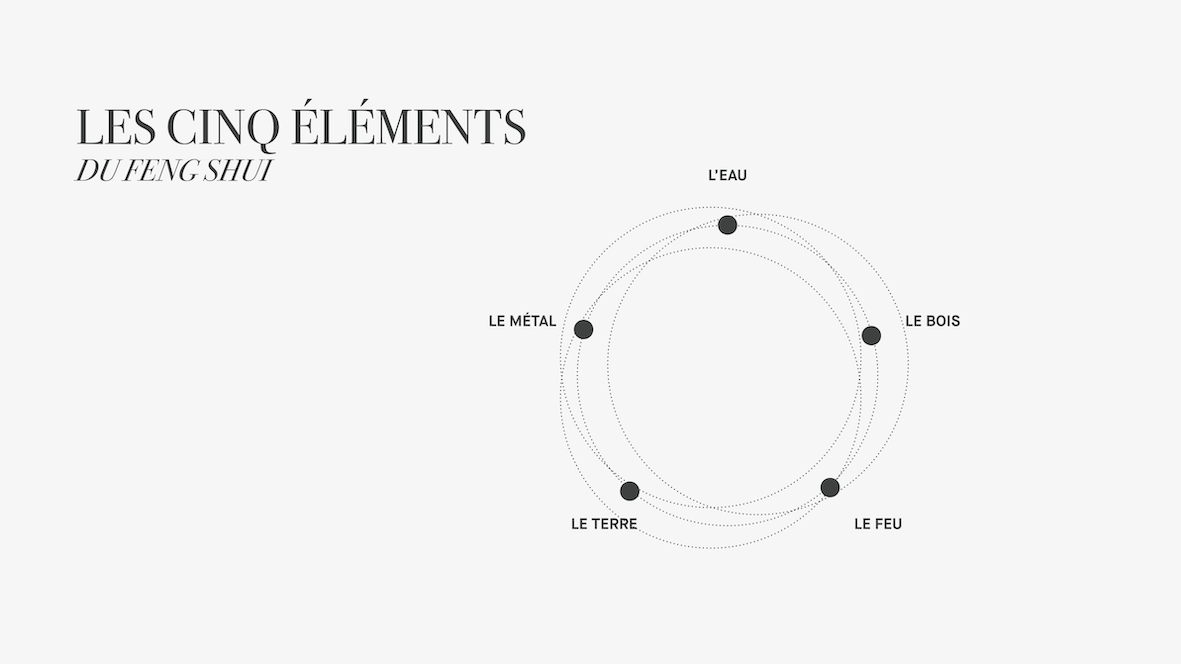
The Five Elements of Feng Shui
Every space should incorporate the five natural elements to balance energies:
1. Wood: Represents growth and vitality. It is incorporated through furniture or plants.
2. Fire: Stimulates passion and enthusiasm, often represented by candles or red accents.
3. Earth: Provides stability and grounding through ceramic objects or shades of beige and brown.
4. Metal: Symbolizes clarity and precision, with metal accessories or frames.
5. Water: Promotes serenity and introspection through mirrors, fountains, or dark colors.
By combining these elements, you can create a harmonious living room that meets your emotional and energetic needs.
Designing Your Living Room According to Feng Shui: Furniture Arrangement for Positive Energy
Optimizing the Flow of Chi
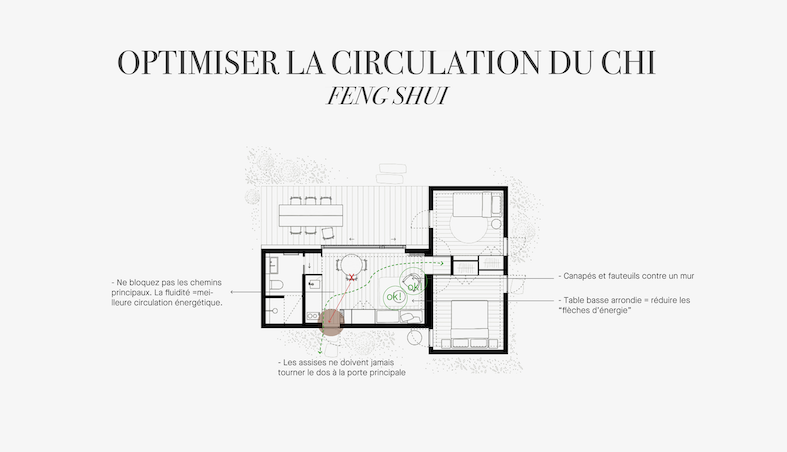
Good chi flow is essential for maintaining harmony in your living room. Here are a few guidelines to follow:
• Seating Arrangement: Place your sofas and armchairs against a wall to create a sense of security. Seating should never have its back to the front door, to avoid a feeling of vulnerability.
• Keep walkways clear: Do not block main pathways with large pieces of furniture. Allowing for smooth movement ensures better energy flow.
• Rounded coffee table: Choose soft shapes, such as rounded coffee tables, to reduce the “energy arrows” created by sharp corners.
Create separate zones
A well-organized Feng Shui living room should feature clearly defined spaces. Use rugs to create a relaxation area, a reading nook, or a play area for children. These divisions help channel energy in a functional way.
Feng Shui Decor: Choosing Colors and the Five Elements for a Harmonious Living Room
Colors and Their Energetic Meanings
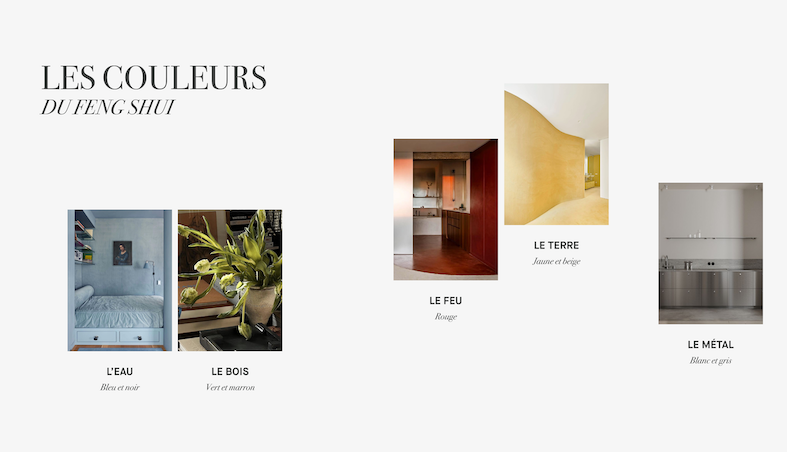
In Feng Shui, colors are not just aesthetic; they directly influence the energies flowing through a space. Each shade is associated with one of the five elements and plays a specific role in the room’s overall balance.
• Green and brown (wood): These colors evoke growth, vitality, and a connection to nature. They are ideal for creating a peaceful, natural atmosphere.
• Red (fire): Dynamic and stimulating, red symbolizes passion and energy. Use it in moderation to avoid an energy overload.
• Blue and black (water): Calm and introspective, these shades promote serenity and tranquility.
• Yellow and beige (earth tones): These soft shades offer stability and a sense of security, making them perfect for a welcoming living room.
• White and gray (metal): Symbols of clarity and structure, they add a modern and elegant touch.
Coordinate Colors in Your Living Room
To maintain balance, it's crucial to combine colors in a subtle way. For example:
• In a south-facing living room, where yang energy is strong, opt for soft colors like beige or blue to create a calmer atmosphere.
• For a north-facing living room, choose warm colors like yellow or brown to compensate for the lack of natural light and create a cozy atmosphere.
The idea is to choose colors that not only complement the room's orientation but also meet the emotional needs of its occupants.
Feng Shui Decor: Designing a Living Room with Natural Materials and the Right Furniture
Prioritize authentic materials
Natural materials are not only aesthetically pleasing but also enhance the energetic harmony of your living room. Among the best choices for a Feng Shui space are:
• Wood: A symbol of vitality and growth, it is ideal for main pieces of furniture such as tables and shelves.
• Rattan and bamboo: Perfect for adding a light, natural touch.
• Natural fabrics: Linen, cotton, and wool provide a soft texture and a comfortable feel.
Avoid synthetic materials
Shiny plastic or metal surfaces, often associated with artificial energy, can disrupt harmony. If these elements are already present, balance them out by adding natural objects such as plants or wooden accessories.
Combine textures to add depth
A mix of textures enriches the visual and tactile atmosphere of your living room. Pair a wool rug with linen throw pillows or light cotton curtains for a balanced look. Each texture contributes a unique energy, adding a pleasant sensory dimension.
Accessories and Mirrors: The Art of Feng Shui for Successful Decorating
Plants: Sources of Vitality
Plants aren't just decorative—they purify the air and embody the energy of wood, a symbol of life and growth. Here are a few recommendations:
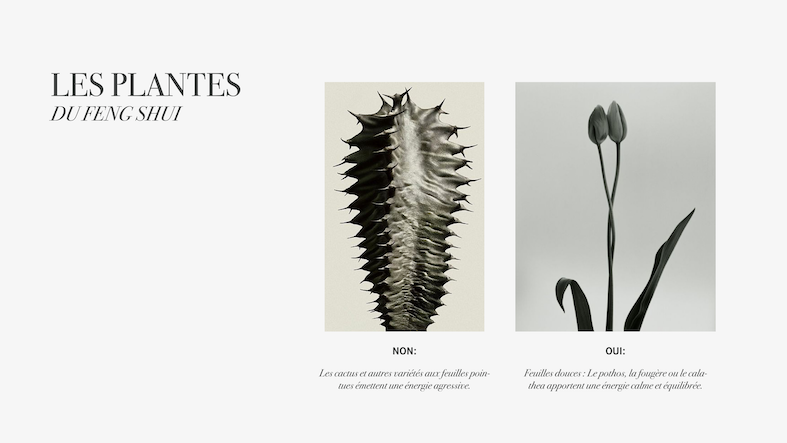
• Plants with soft leaves: Pothos, ferns, and calatheas bring a calm and balanced energy.
• Plants to avoid: Cacti and other plants with sharp leaves emit aggressive energy, which goes against Feng Shui principles.
The Importance of Mirrors
Mirrors are powerful tools in Feng Shui because they amplify natural light and improve the flow of chi. However, their placement must be carefully considered:
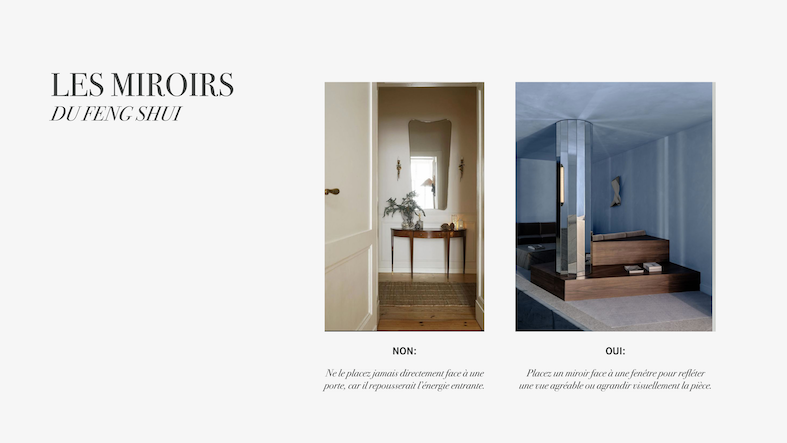
• Ideal placement: Place a mirror in front of a window to reflect a pleasant view or make the room appear larger.
• Avoid: Never place it directly in front of a door, as it will repel incoming energy.
Textiles and Decorative Items
• Pillows and rugs: Use fabrics with simple patterns and natural colors to promote calm and relaxation.
• Symbolic objects: Incorporate items that represent the five elements, such as candles (fire), natural stones (earth), or metal vases (metal).
Organization and Optimization: Avoid Clutter for a Soothing Feng Shui Living Room
Clutter: The Enemy of Feng Shui
A cluttered living room blocks the flow of chi and can even cause stress for those living there. Here's how to avoid that:
• Built-in storage: Choose closed-door furniture, such as sideboards or shelving units with doors, to hide everyday items.
• Simplify your decor: Choose a few meaningful decorative items rather than an excess of objects.
Create a Flexible Organization
• Open spaces: Keep main surfaces, such as tables and floors, as clear as possible to promote the free flow of energy.
• Prioritize walkways: Make sure there are no obstacles blocking the way.
Feng Shui Decorating Tips: How to Arrange Your Living Room for Each Season
Maximize Natural Light
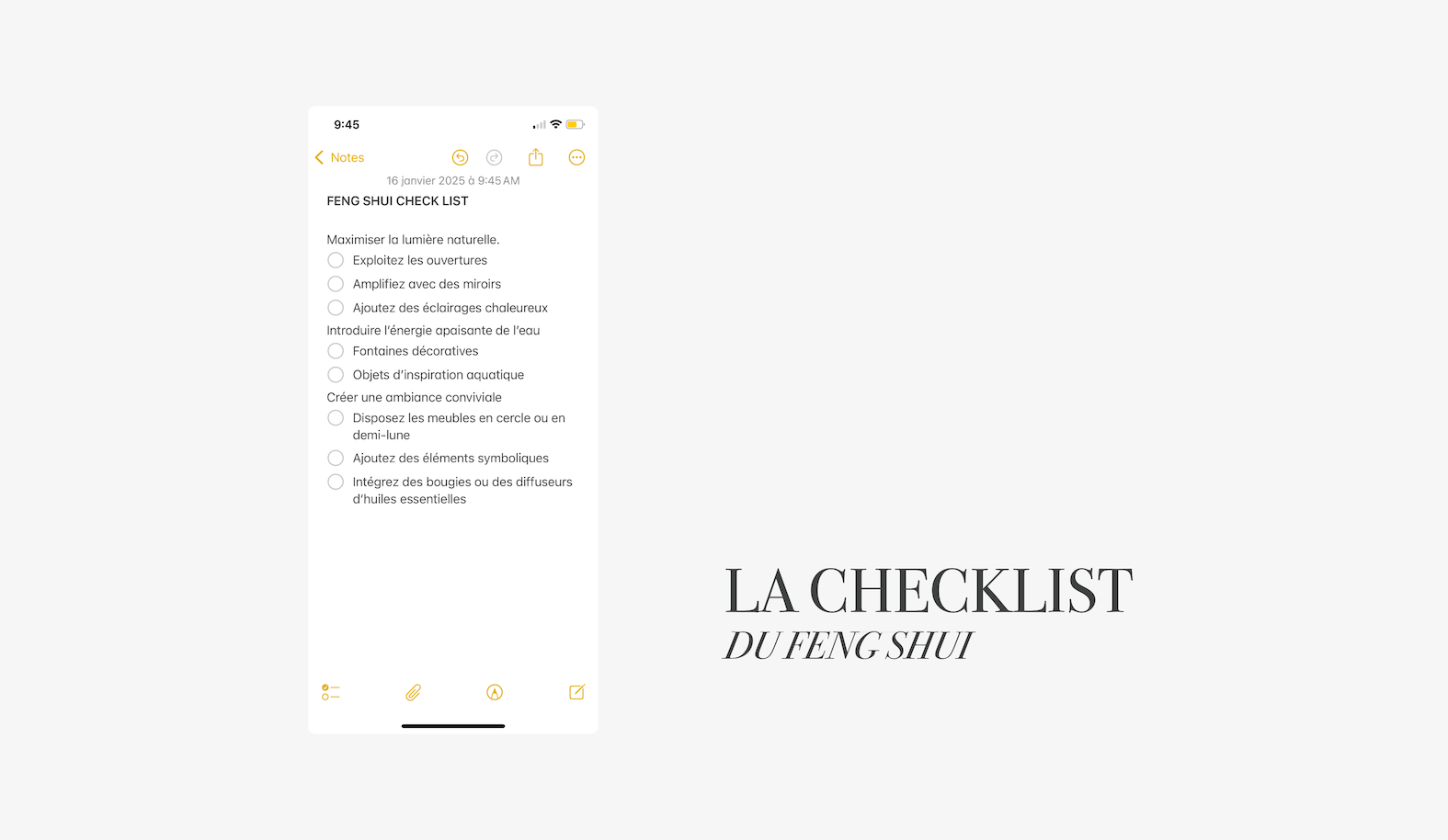
Natural light is an essential source of positive chi in Feng Shui. It brightens the space, creates a warm atmosphere, and promotes the harmonious flow of energy.
• Make the most of your windows: Let in as much light as possible by avoiding heavy or opaque curtains. Opt for light sheers to diffuse the light while maintaining privacy.
• Use mirrors to amplify light: Place a mirror strategically to reflect natural light and brighten dark areas.
• Add warm lighting: If the room lacks natural light, choose lamps with warm-toned bulbs that recreate the relaxing effect of daylight.
Bringing in the soothing energy of water
Water, a symbol of serenity and abundance, is an important element in Feng Shui. You can incorporate this element subtly:
• Decorative fountains: A small fountain with a steady flow of water brings gentle energy and promotes prosperity.
• Aquatic-inspired items: Blue vases, paintings of seascapes, or clear glass accessories evoke the image of water.
Make sure that water—whether real or symbolic—remains clean and flowing to prevent energy from stagnating.
Create a friendly atmosphere
A Feng Shui living room is, above all, a place for sharing and relaxation. To foster a warm, welcoming atmosphere:
• Arrange the furniture in a circle or a half-circle: This encourages interaction and creates a welcoming atmosphere.
• Add symbolic items: Objects such as photo frames or travel souvenirs bring back happy memories and boost positive energy.
• Incorporate candles or essential oil diffusers: These accessories help create a relaxing atmosphere while activating the fire element.
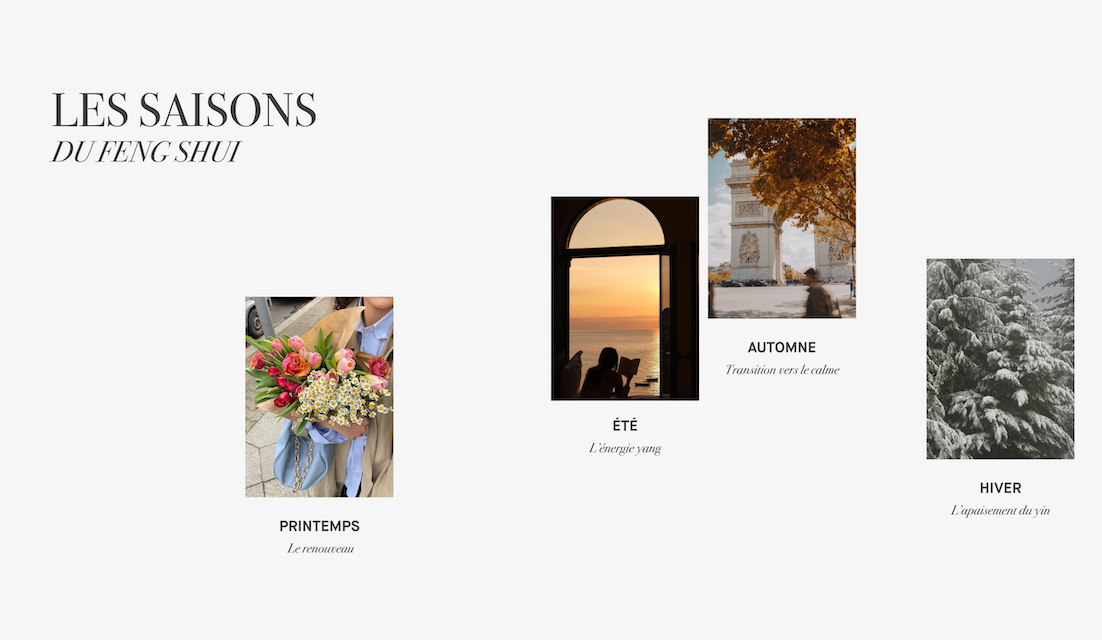
Adapting Feng Shui to the Seasons
Feng Shui isn't static—it evolves with the cycles of nature. Here's how to adjust your living room for each season:
Spring: Renewal
• Add fresh plants to symbolize growth and vitality.
• Replace heavy fabrics with lightweight ones in light, bright colors.
• Add wooden elements to enhance the energy of renewal.
Summer: Yang Energy
• Incorporate red or orange accents to represent the element of fire, a symbol of dynamism and passion.
• Increase air circulation by using fans or opening the windows wide.
• Choose cooling materials like linen or rattan.
Fall: A Transition to Calm
• Incorporate warm colors such as yellow, brown, or terracotta to symbolize the earth and a sense of being grounded.
• Add metal accessories, such as frames or sculptures, to enhance clarity and structure.
• Arrange ceramic or stone objects to balance the energy.
Winter: Soothing the Yin
• Choose shades of navy blue, gray, or black to evoke the element of water.
• Add cozy textiles, such as throws or wool pillows, to create a warm atmosphere.
• Incorporate soft lighting to create a relaxing atmosphere.
Conclusion: A Feng Shui living room to create a haven of well-being and harmony in your home
Applying Feng Shui principles in your living room is much more than just an aesthetic choice—it’s a way to improve your daily well-being. By balancing yin and yang energies, promoting the flow of chi, and incorporating the five elements, you can transform your living room into a space that is functional, harmonious, and relaxing.
A Feng Shui living room is a space that reflects your personality while meeting your emotional needs. Whether by adjusting the colors, choosing natural materials, or incorporating meaningful accessories, every detail contributes to an atmosphere that makes it a pleasure to spend time there.
FAQ: Discover the Secrets to a Successful Feng Shui Living Room
1. What elements should you prioritize in a Feng Shui living room?
Furniture made from natural materials, plants with soft, flowing shapes, and accessories symbolizing the five elements.
2. What mistakes should you avoid?
Avoid sharp corners, mirrors placed incorrectly across from a door, and clutter that blocks the flow of energy.
3. Is Feng Shui suitable for small living rooms?
Yes, by using tricks like mirrors to make the space look bigger and built-in storage to reduce clutter.
4. How can you balance yin and yang in a living room?
Combine soft elements, such as plush textiles and subdued lighting (yin), with bright colors and stimulating objects (yang).
5. How can you incorporate the fire element without using too much red?
Add candles, lamps, or accessories in shades of orange or gold to subtly evoke the image of fire.