


What if you took back control of your daily life?
📍 Welcome to a three-part series dedicated to the Analog Life.
In a world where screens dominate every moment and notifications constantly pull us from one thing to the next, regaining control of our time has become essential. But how can we slow down without letting go of everything, without giving up the benefits of technology?
That’s where “Analog Life” comes in—an approach that doesn’t advocate a total rejection of digital technology, but rather encourages us to reintroduce more tangible and sensory activities into our daily lives. It’s not about giving it all up to live like a hermit or throwing your phone in the trash; rather, it’s about finding a balance that fits your own pace and your desire to disconnect.
This series of articles will guide you through this transition in three progressive steps. In this first part, we’ll explore simple adjustments that allow you to limit the role of digital technology in your daily life without feeling restricted. Ideal for those who want to ease into it and start making changes.
📌 What's covered: We've broken this article down by time of day (morning, noon, evening), with a special section for days off, when you have more freedom to set your own schedule.
🔜 Ready to give it a try? Join us as we take these first steps toward a more peaceful daily life. And if you’d like to take it a step further, the next two articles will guide you toward a deeper immersion in the Analog Life.
Morning – Start the day differently
To get off to a good start, the goal is to reduce screen time and develop more mindful habits, without disrupting your daily routine.
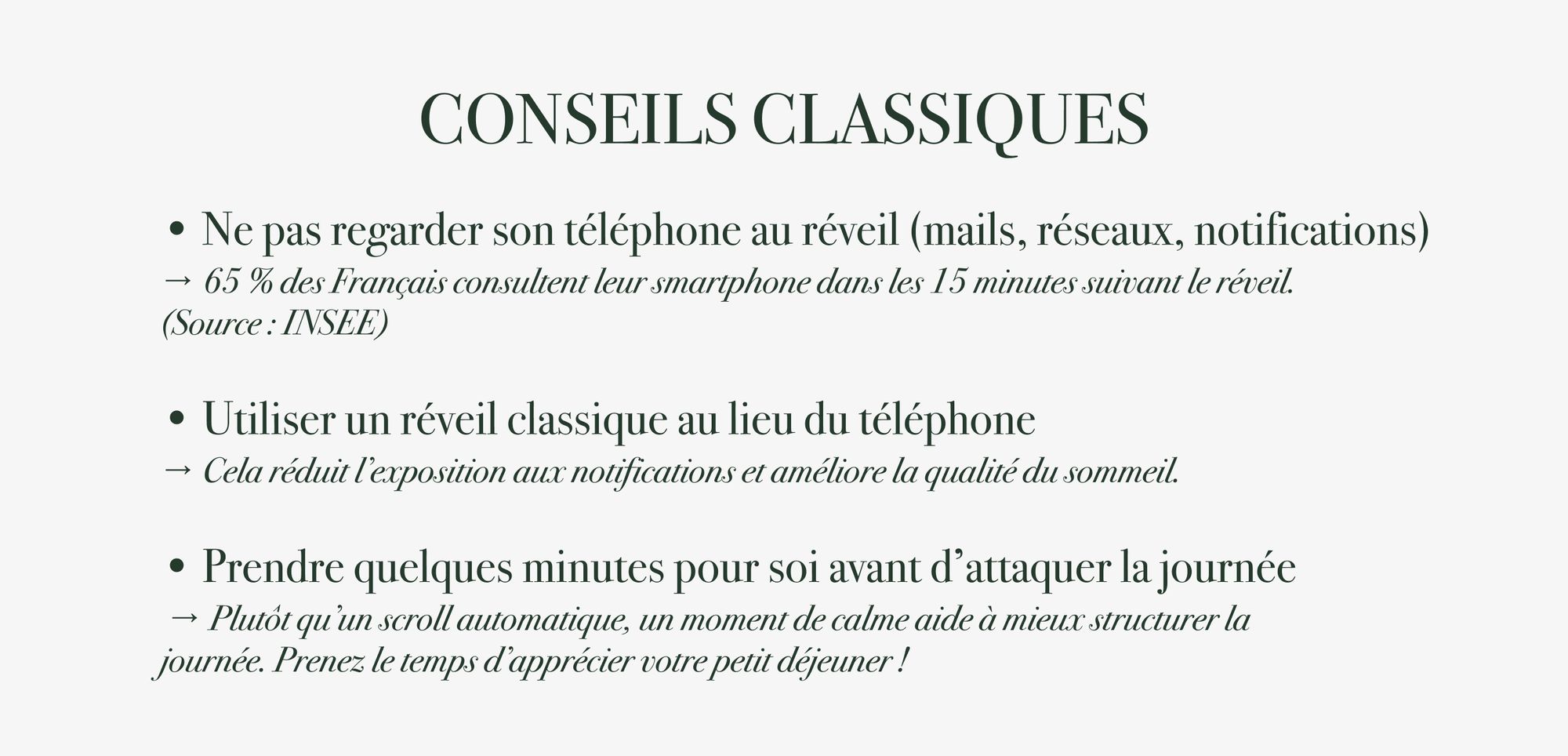
For more information:Write by Hand First Thing in the Morning → Instead of starting the day with passive content (social media, news), take 2 minutes to write by hand: a thought, an idea, or a goal for the day. → Handwriting stimulates memory and helps organize your thoughts. (Princeton University study)
Create an Analog Morning Ritual → Replace scrolling with a tangible action: mindfully pour your coffee, flip through a magazine, pet your cat, look out the window… → The first things you do in the morning set the tone for the rest of the day.
Limit exposure to artificial light → Instead of turning on all the lights and screens as soon as you wake up, opt for natural or soft lighting. → Exposure to sunlight within the first hour after waking up helps regulate your body clock more effectively. (Source: Journal of Clinical Sleep Medicine)
Noon – Take a real break, away from digital devices
Lunchtime is often disrupted by notifications, screens, and a fast-paced rhythm. The goal here is to reintroduce calmer, more tangible moments, without necessarily changing your entire routine.
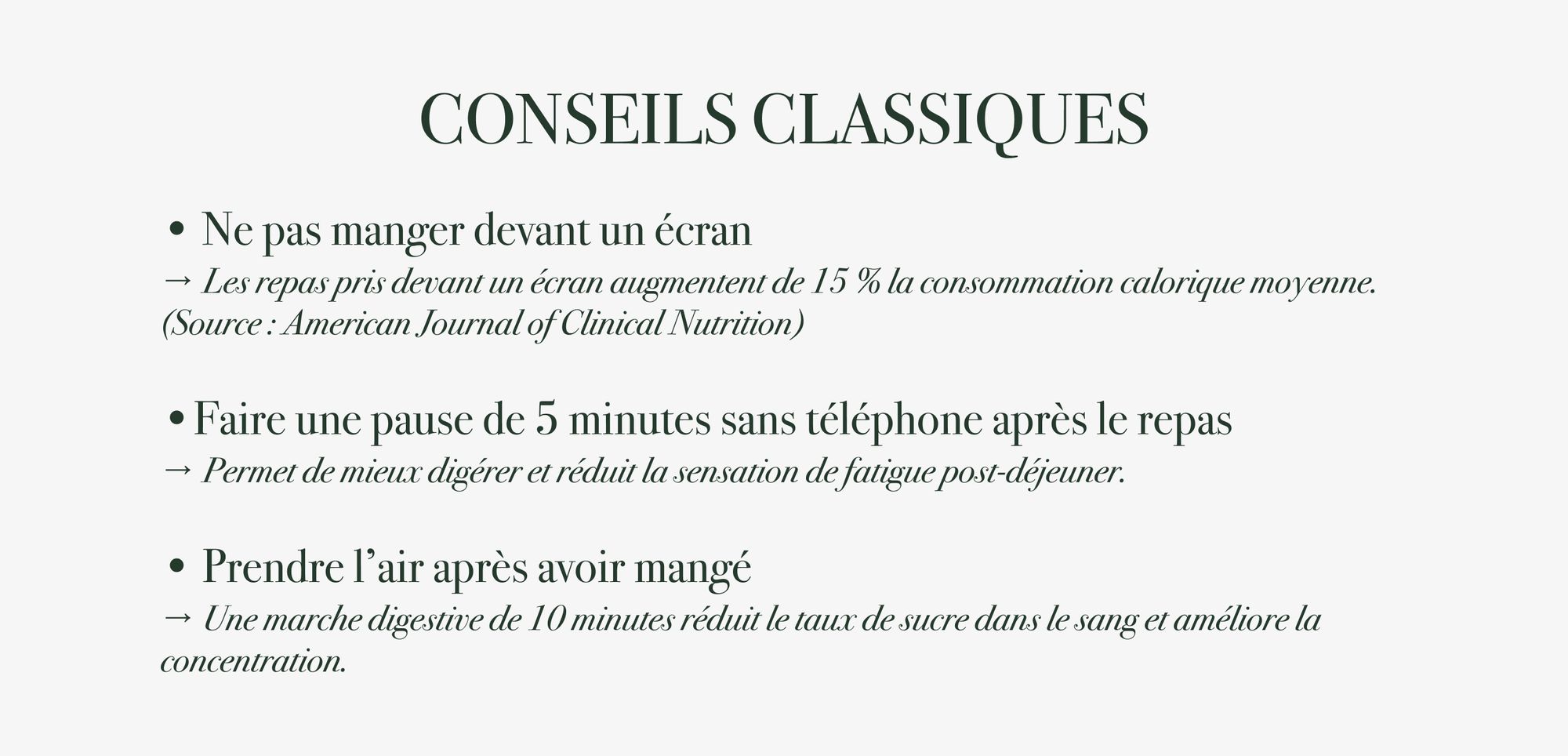
To learn more:Take a true sensory break → Spend a few minutes listening to your surroundings, observing what’s happening around you, and feeling the air on your skin. → Practicing mindfulness during breaks reduces stress and improves productivity.
Changing Your Perspective on the Lunch Break → Instead of seeing it as “downtime,” make it a real moment for yourself, where you nourish your body and mind without digital distractions.
Avoid multitasking → Eat while reading a book or chatting, rather than looking at your phone and answering emails at the same time. → The brain isn’t designed for multitasking: it increases cognitive fatigue and impairs memory retention.
Evening – Unplug to Reconnect
Evenings are often a time when we unwind in front of a screen —watching TV shows, scrolling through social media, watching videos… The idea here is to introduce simple alternatives to lighten the digital load without causing frustration.
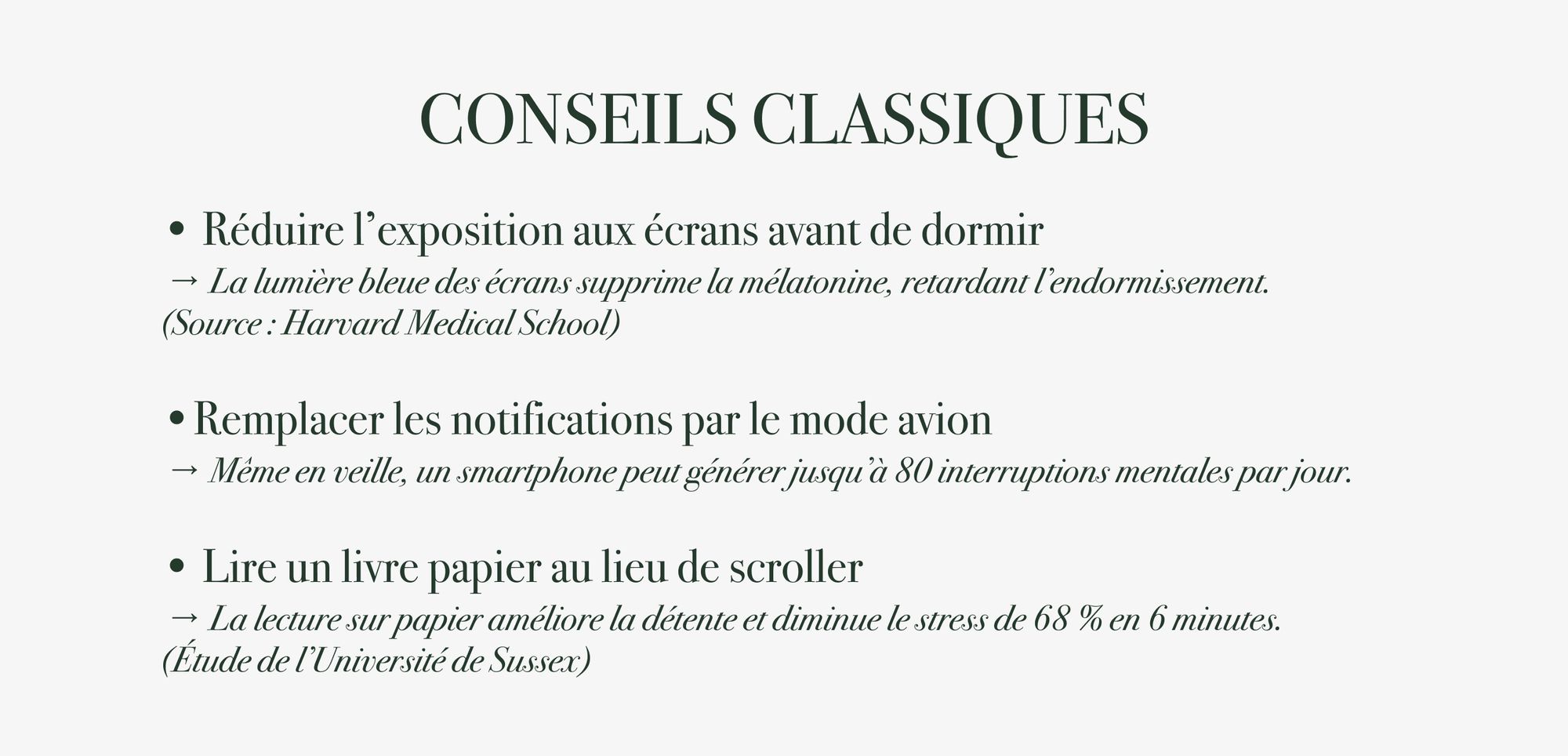
Learn more:Create a transition from day to night → Change clothes, dim the lights, diffuse a pleasant scent… Sensory cues to signal to the body that it’s time to slow down.
Replace streaming with a hands-on activity → Listen to a vinyl record, do a puzzle, write a few lines in a notebook, light some candles… The idea is to replace the habit of “just letting a show play in the background” with another enjoyable ritual.
Creating a Tech-Free Space at Home → Designate an area (bed, living room, dining table) where no screens are allowed. → Screen-free environments improve the quality of interactions and overall well-being.
Days Off – Take some time away from screens.
Weekends and days off are often a break when we have more control over our schedules. However, they’re also days when we sometimes spend even more time in front of screens—binge-watching, browsing social media, and scrolling endlessly. How can we turn these into moments when we’re truly unplugged, without feeling frustrated?
The goal is simply to reduce our reliance on digital devices and focus on a few hands-on activities, without necessarily disrupting our routines.
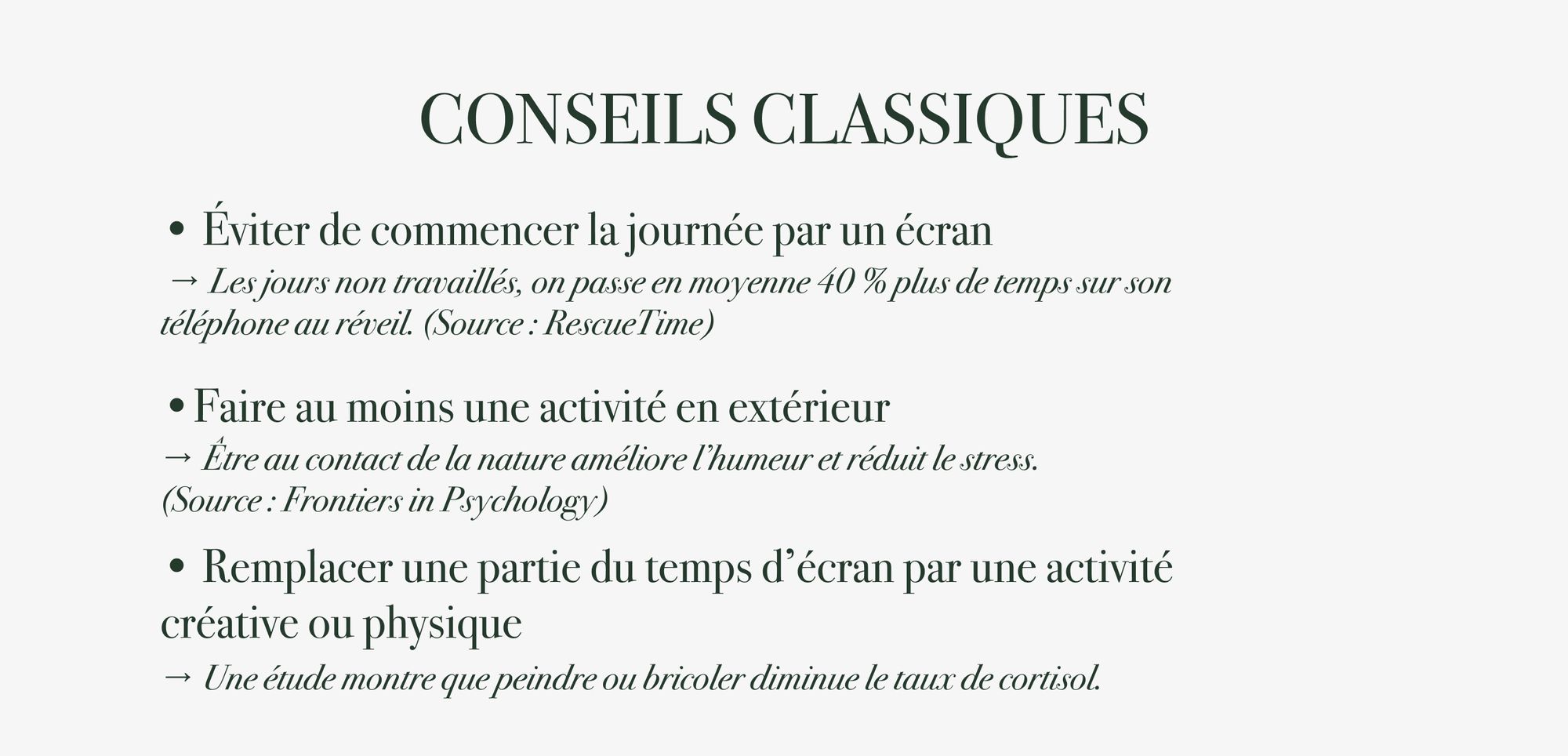
Take it a step further:Leave your phone in airplane mode for part of the day → Turn off notifications for a few hours—especially in the morning or early evening—to enjoy some “real” time.
Have a cup of coffee or a meal without your phone within reach → Leave your phone in another room or in a bag to avoid the automatic urge to check it.
Plan an outing without using digital devices → Go to the market, take a walk, or visit an exhibit without taking photos or looking up information online. → This helps develop memory and attention to detail.
It's just the beginning, but it's already a lot!
You’ve taken your first steps toward the Analog Life by trying out some simple changes to reduce the role of digital technology in your daily life. Perhaps you’ve noticed that you can concentrate better, feel more at peace, or simply enjoy having more screen-free time.
But if these initial changes have inspired you to take it a step further, it’s time to deepen your commitment. In the second part of this series, we’ll explore more established habits and structured practices to further your transition toward a more meaningful life.
📌 Read more:➡️ Part Two - Dive Deeper into Disconnection [COMING SOON]➡️ Part Three - Immerse Yourself in Total Disconnection [COMING SOON]