

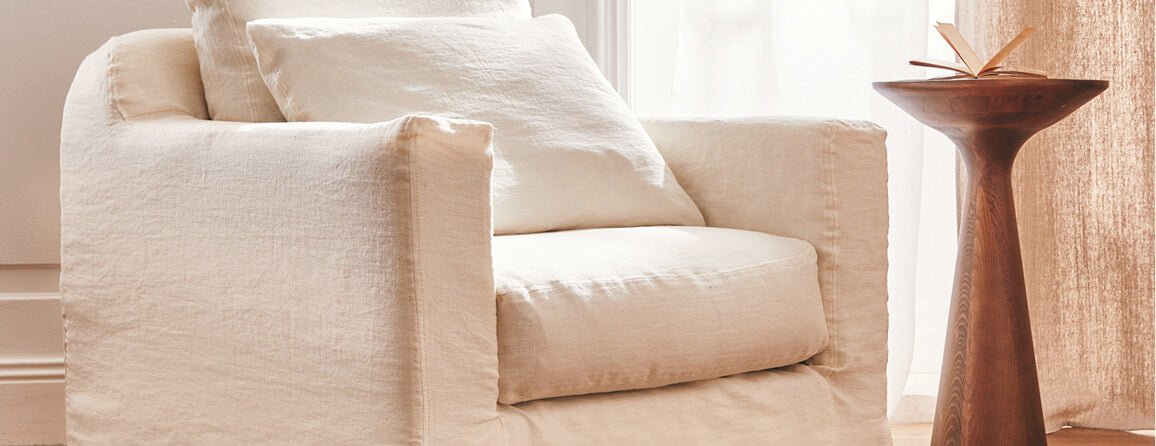
What level of firmness should you choose for an armchair?
An armchair is a piece of furniture that can fit into many rooms in the home. Whether in the living room in front of the TV, near a bookshelf for comfortable reading, or in front of a desktop computer, it is an essential piece of furniture that is both functional and decorative.
There are many factors to consider when choosing the right chair, and among them, the firmness of the seat is one of the most important. This depends on the density of the foam used in the chair’s construction and directly affects support and comfort.
But then, what is the best level of firmness for an armchair? How do you choose an armchair based on this criterion?

The different types of foam used for armchair padding
To choose the right level of firmness for an armchair, you need to consider the foam used in its padding. Seating comfort depends on the quality and density of the foam. This foam is also used in other pieces of furniture, such as sofas and even mattresses.
First and foremost, it is very important to choose high-quality foam, since an armchair may seem comfortable at first but may stop being so after a few months. Therefore, it is best to choose memory foam that can regain its original shape and density even after being compressed by the user for several days or months.
There are several types of foam used for upholstering armchairs:
- polyester (PE) foam;
- high-density (HD) polyurethane foam;
- high-resilience (HR) polyurethane foam.
It’s a good idea to know the type of foam used in an armchair’s padding before purchasing it, since this information gives you an idea of the seat’s firmness. Polyester foam, for example, is a low-density foam and doesn’t offer a high level of firmness. This type of foam is often used in entry-level armchairs. High-density polyurethane foam is generally used in mid-range armchairs, while high-resilience polyurethane foam has the highest density and therefore often increases the price of the armchair.
Good to know: A layer of Dacron, latex, feathers, or memory foam is usually added between the seat foam and the upholstery. This intermediate layer can affect not only the chair’s appearance but also how it feels when you sit in it.
What is the density of the foam used to pad an armchair, depending on the type of foam?
The density of foam in an armchair is measured in kg/m³. Therefore, in addition to the type of foam used, you should pay attention to the density when choosing the firmness level of an armchair’s seat. The lower the foam density, the softer and less comfortable the armchair will be. Conversely, the higher the density, the firmer the foam.
Please note: A firm chair does not mean it is hard. Firmness affects the chair's support and its ability to hold the user without making the seat uncomfortable.
The average density of foams varies depending on the type. For example, the density of polyester foam averages between 16 and 25 kg/m³. This foam is less durable over time and eventually loses its ability to support and hold the user as it sags.
As for high-density polyurethane foam, the density increases and averages between 24 and 35 kg/m³. This type of foam is commonly used in the manufacture of living room armchairs. HD polyurethane foam offers a medium level of firmness that is ideal for relaxing while sitting comfortably. With a density of over 30 kg/m³, it is also ideal for office chairs, helping to maintain good posture while working.
Finally, polyurethane foam has the highest density, ranging on average from 35 to 40 kg/m³. Although this type of foam offers a high level of firmness, it is more commonly used in bedding than in armchairs.
What density should you choose for your chair based on the level of comfort and support you're looking for?
To choose the firmness level of your chair, you should therefore pay close attention to the type of foam used for the padding as well as its density. It is essential to check these two factors, because low-density foam may be thick and seem firmer at first, but this firmness will diminish over time and with use.
For the right balance between comfort and support, it is recommended to choose a seat firmness level between 30 and 35 kg/m³ using high-density polyurethane foam. By choosing this type of armchair, the user can be sure they are investing in a durable piece of furniture.
However, you shouldn’t focus solely on the firmness of the seat. The firmness of the backrest —and even the armrests—is also important. As for the backrest, a density of 20 to 25 kg/m³ is sufficient, since the backrest doesn’t have to support as much weight as the seat. It is therefore perfectly acceptable to choose an armchair with a polyester backrest. However, if you have back problems or if the armchair will be used daily—such as an office chair, for example—it may be wise to opt for a firmer backrest.
And what about the armrests? This feature is rarely taken into account. However, it may be a good idea to choose the firmness of the armrests based on individual preferences as well.
Seat support and suspension: other factors that can affect seating comfort
In addition to density—which refers to the firmness of the foam and affects how deeply the body sinks into the seat once the user is seated—there are other factors to consider when choosing the right chair.
This is the case with density, which refers to the thickness of the bubbles. This parameter affects the foam’s elasticity. As a result, the level of support varies depending on the density of the chair’s foam. Finally, the suspension system is also very important for seating comfort. In the past, armchairs used springs that provided significant bounce, but today, most armchairs are made with elastic straps.
We recommend these other pages: