


You don't choose a sofa the way you choose an accessory. You choose it to keep it. So it can weather the seasons, moves, and everyday use. The real question when buying a sofa isn't "How long will it last?" It's: "What makes a sofa truly last?"
A sofa’s lifespan depends on three things: the sturdiness of the frame, the quality of the seating, and the ability to maintain and replace worn-out parts. Our sofas are designed around these three principles: solid wood that doesn’t warp, 100% natural latex that doesn’t sag, and removable covers that can be replaced. The result: sofas that easily last 10 to 15 years, with no trouble at all.
How long does a sofa last?
The lifespan of a sofa varies greatly depending on the materials used and the quality of construction. On average, an entry-level sofa lasts between 3 and 5 years before showing serious signs of wear. A mid-range sofa made of synthetic fabric generally lasts 7 to 10 years with regular care. A high-quality sofa, made of solid wood and upholstered with natural latex, can easily last more than 15 years in good condition.
The lifespan of your sofa depends on several factors: the intensity of daily use, the quality of the materials used in its construction, and the care taken in maintaining the upholstery and cushions. High-end furniture does not deteriorate in the same way as furniture made to be inexpensive. The difference is visible—and, above all, noticeable—over the years.
A well-maintained sofa made of solid wood and natural latex will easily last 10 to 15 years with daily use. That’s two to three times longer than a particleboard sofa with a synthetic foam seat.
Structure and Assembly: What Holds a Sofa Together
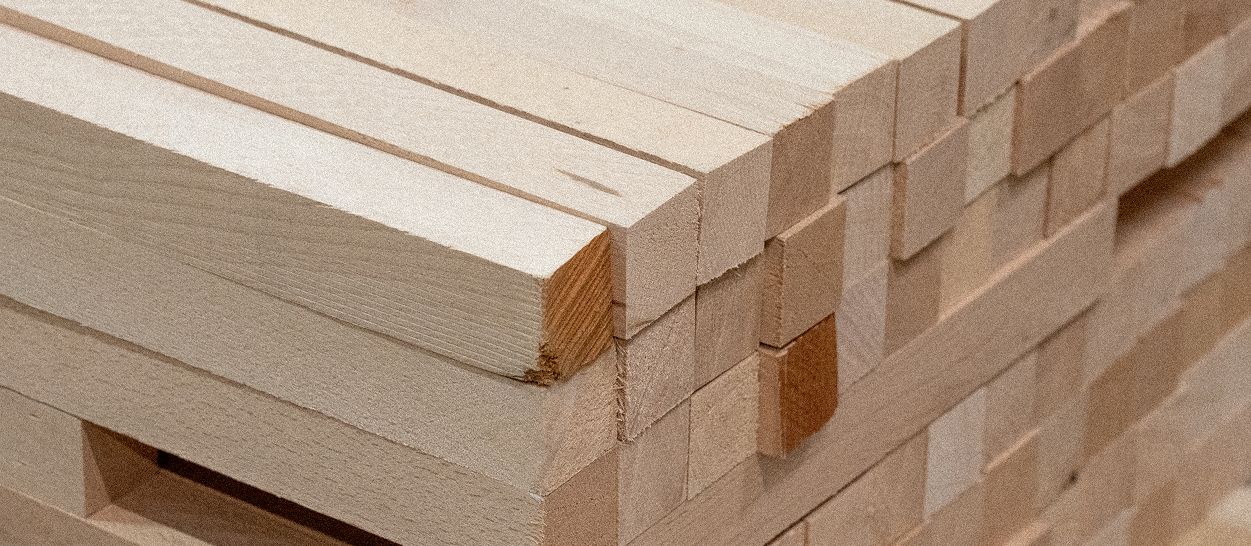
A sofa’s durability depends first and foremost on what you can’t see: its internal frame and the quality of its construction. Most sofas on the market are built on frames made of fiberboard or particleboard. These materials do not hold up well under repeated stress. They warp, crack, and eventually give way under the weight of daily use. This is often why people end up buying a new sofa long before they actually want to.
Our sofas are built on solid wood frames. Solid wood does not warp, is not affected by humidity, and does not give way under repeated pressure from sitting. It’s the same principle we apply to our beds: choosing wood that can truly support the weight, so that the furniture remains in good condition year after year.
Craftsmanship matters just as much as the materials. We work with artisanal manufacturers in France, Spain, and Poland who have been designing sofas for several decades. This expertise directly translates into durability: every stitch and every joint between the frame and the upholstery is designed to stand the test of time.
Natural latex: a seat that doesn't sag
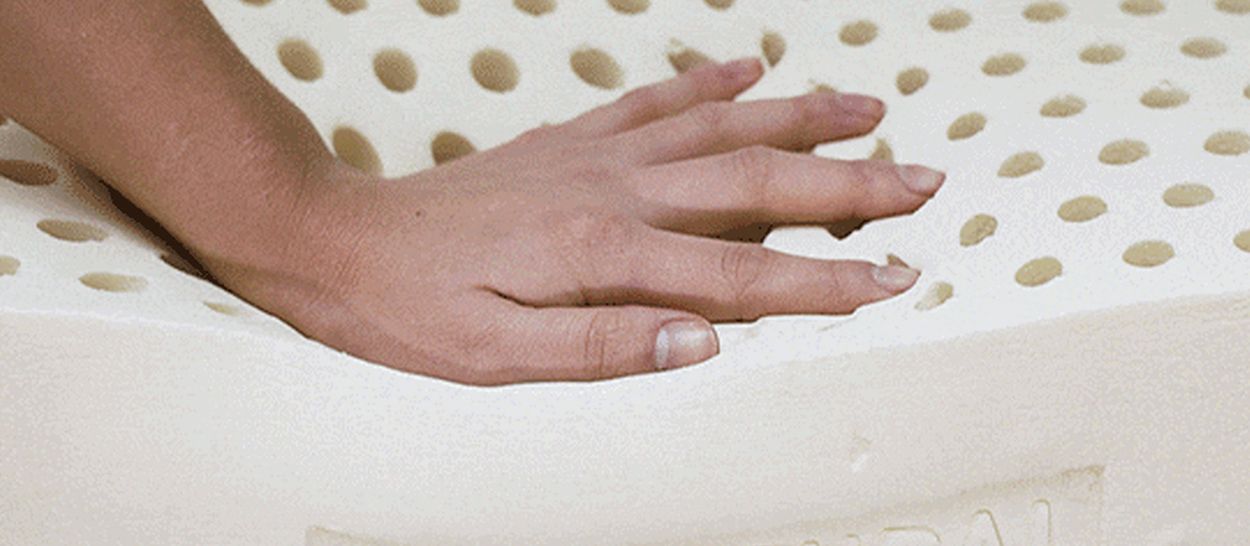
The most common problem with sofas on the market is that the cushions sag. After two or three years, polyurethane foam cushions lose their volume. The seat sags where you sit most often, the support disappears, and the sofa takes on that worn-out look that you eventually can’t stand anymore. That’s when you start thinking about buying a new sofa, even though the frame is still in good condition.
100% natural latex works differently. Its structure allows it to return to its original shape after each use. It does not compress, settle, or develop indentations. A natural latex seat cushion with a density of 85 kg/m³ —the density we use in all our sofas—retains its properties over the long term without any chemical treatment.
At Kipli, we’ve been using natural latex since 2018—first in our mattresses, then in our sofas. It’s the only material we know of that truly stands the test of time, without losing its shape or requiring any treatment.
On certain models, latex is combined with recycled feathers in the backrest cushions to create a feel that is both soft and supportive: supple on the surface, firm at the core. This comfort does not diminish with use; it actually improves over time.
The coating: the last line of defense against wear and tear
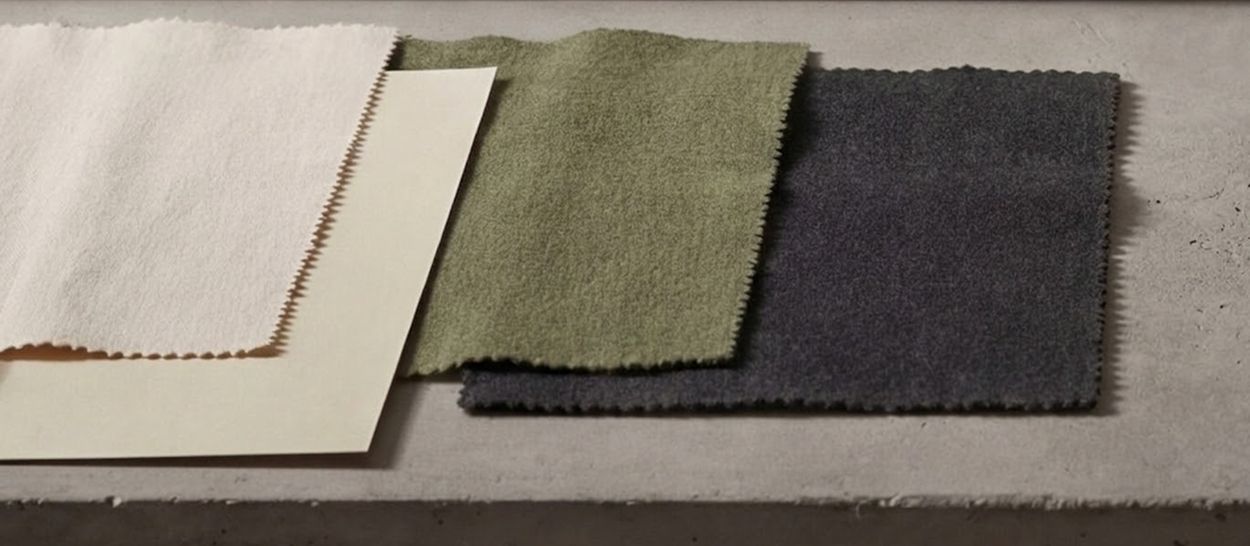
The frame holds up well. The cushions don't sag. That leaves the upholstery—which is often the first thing to give out on synthetic-fabric sofas: pilling, fading, and snags.
We select natural, durable fabrics depending on the design: French linen woven by Lemaitre Demeestere since 1835, or organic cotton woven in Spain. These materials do not pill, do not lose their shape, and age better than most synthetic fabrics. They develop a patina with use rather than wearing out.
On most of our models, the covers are fully removable. Each cushion cover can be removed individually. If there’s a stubborn stain on just one cushion, there’s no need to replace the whole thing—just replace what needs to be replaced, and the sofa will look as good as new. That’s what really sets it apart from ordinary furniture: the ability to replace individual components without having to buy a whole new set.
Our sofas, built to last
ARCO
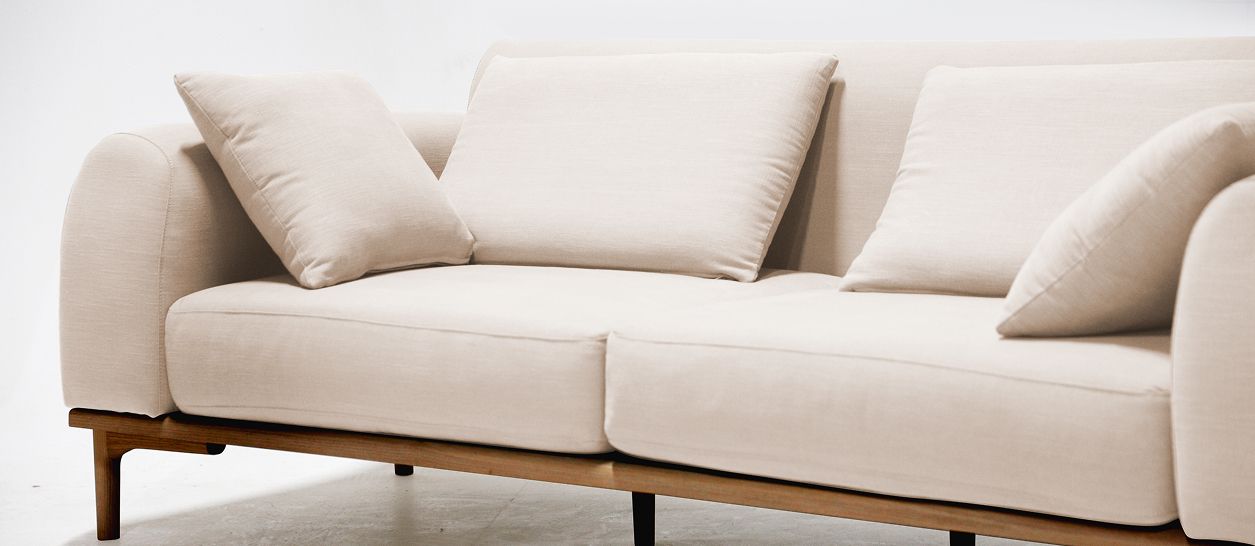
The ARCO sofa is our most striking solid wood model. Its frame is made of solid European ash, finished with Rubio oil—a VOC-free vegetable oil certified by Greenguard and Eurofins Gold Label. The base frame is made of solid pine from the Basque Country. The seat and backrest are made entirely of 100% natural latex with a density of 85 kg/m³. The fabric is organic cotton woven in Spain. The seat cushions have removable covers and are dry-cleanable; the armrests and fixed backrest can be cleaned with a damp cloth. Handcrafted in Spain by a partner artisan.
PALM
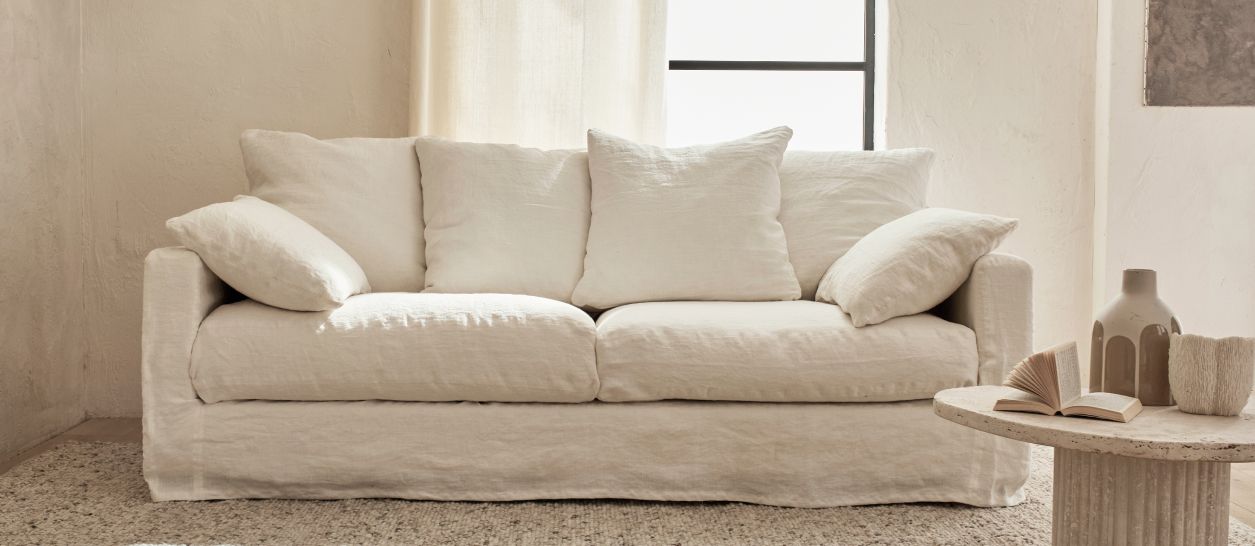
The PALM sofa is our flagship model made from French linen. It features a solid beech frame, a seat filled with 100% natural Eurolatex-certified latex and recycled feathers, and recyclable steel springs assembled by hand. Upholstered in Lemaitre Demeestere linen, with a fully removable cover that is dry-cleanable. Available in 2-, 3-, or 4-seater configurations. Manufactured in northern France by a family-owned business that has specialized in sofas for over 50 years. Estimated lifespan: 15 years.
OLIA
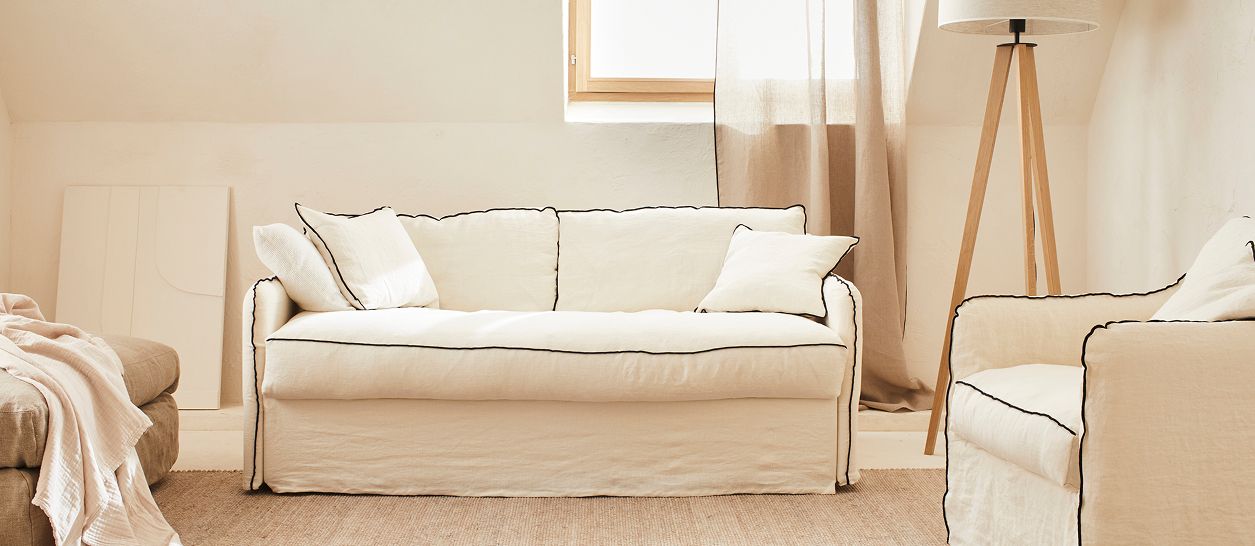
The OLIA sofa embodies the same design philosophy as the PALM but in a more compact size (165 to 185 cm). It features the same solid beech frame, the same seat made of 100% natural latex and recycled feathers, the same Lemaitre Demeestere linen, and hand-assembled recyclable steel springs. The covers are fully removable and dry-cleanable, and the sofa is manufactured in northern France. The elasticity of the latex ensures that the seat regains its shape after each use, without premature sagging.
FOLIA
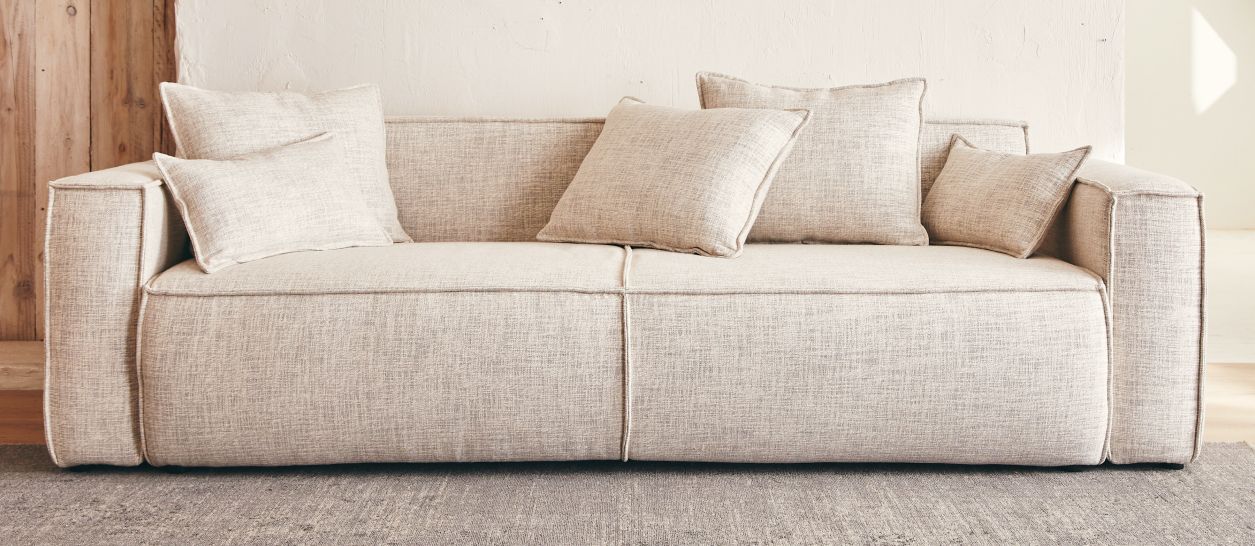
The FOLIA convertible sofa is designed for two purposes: sitting during the day and sleeping at night. It features a solid beech frame and a plywood base. The seat, sleeping surface, and backrest are made entirely of 100% natural latex with a density of 85 kg/m³, ensuring the same durability for both functions. The fabric varies depending on the color chosen: 100% cotton for gray, chocolate, and cream; a blend of recycled polyester, organic cotton, and linen for beige, olive, and camel. Care: Wipe with a damp cloth and Marseille soap; do not use chemicals. Made in Poland by a partner artisan. 4-seater, sleeping area 145x200 cm.
Discover the FOLIA sleeper sofa
A synthetic fabric sofa is cheaper to buy. It ends up costing more over ten years because you'll have to replace it.
Buying a sofa made of solid wood and natural latex means looking at it from the opposite perspective: making a one-time investment—a real one—in a piece of furniture that will stay in good condition.