


We invest in a good mattress. We replace our sheets. And yet we’ve been using the same pillow for five years without really asking ourselves whether it suits our body type, our sleeping habits, or any neck tension we might have. Yet a good night’s sleep starts right here—at the head, neck, and shoulders. These areas determine whether the body truly relaxes during the night or whether it spends hour after hour compensating for poor alignment. Natural latex has established itself as the gold standard for this purpose. But it’s still important to understand why—and, more importantly, how to choose the right one based on your sleeping profile.
Why Latex?
Why natural latex rather than another material?
Most pillows available on the market are made from synthetic materials derived from petrochemicals, such as polyurethane, viscoelastic foam, or polyester microfiber. These materials trap heat, lose their shape within two to four years, and can release odors and volatile organic compounds (VOCs) into the sleeping environment.
Natural airflow that regulates the temperature
The honeycomb structure of latex allows for constant air circulation. The result: no heat buildup around the head, no feeling of dampness at night, and far superior temperature regulation compared to conventional foam. This is one of the documented benefits of natural latex for sleep quality. To learn everything about this material, our comprehensive guide to natural latex provides an in-depth look at its properties.
Elastic and dynamic support
Latex conforms to the shape of the neck and head, then immediately returns to its original shape as soon as the pressure is released. This elastic behavior helps maintain neutral cervical alignment, even when you change positions during the night. This is fundamentally different from memory foam, which holds the head in a fixed position and reacts slowly to every movement.
Naturally hypoallergenic and dust-mite resistant
Natural latex is naturally resistant to dust mites and mold without any added chemical treatments. This is a significant benefit for indoor air quality, especially since the pillow is the bedding item closest to your respiratory tract throughout the night. We cover the topic of natural latex and its effectiveness against allergies and dust mites in detail in a dedicated guide.
Significantly greater durability
Whereas synthetic foam loses its support within two to three years, natural latex retains its structure for much longer. CATAS certification tests have shown that a natural latex core does not deform significantly even after ten years of use. It has the same longevity as a natural latex mattress, for the same reasons.
How Is the Kipli Pillow Made?
The sap from the rubber tree is collected, processed without petrochemical solvents, and then molded into a contoured shape to fit the nape of the neck. The Kipli pillow is handmade in Italy, near Milan, in a workshop founded in 1955 by Sergio, a specialist in natural latex processing for over 60 years. A complete breakdown of the process is explained in our guide on how a natural pillow is made.
Selection Criteria
Key Criteria for Choosing the Right Pillow
Density and firmness
The density of latex (in kg/m³) directly determines the level of support. A pillow with a density of 55 kg/m³ is ideal for side sleepers who need firm support. A density of around 50 kg/m³ provides a softer feel, suitable for back sleepers. Our guide on whether to choose a firm pillow can help you determine your sleep profile. For a similar question about mattresses, our article on how to choose the right firmness for your mattress follows the same logic.
The shape and ergonomic curve
A classic rectangular pillow is suitable for most sleepers. An ergonomic pillow with varying contours—higher on one side (10 cm), lower on the other (8.5 cm), and slightly indented in the center (7 cm)—is designed for people who suffer from neck pain or need more anatomical support. Our guide on how to choose an ergonomic pillow details the criteria to consider.
The Cover and Care Instructions
A cover made of organic cotton (61%) blended with Tencel (39%) improves overall breathability and skin comfort. It should be removable and machine-washable at 30°C. This is the part most exposed to sweat and allergens. To help you choose pillowcases, our guide on how to choose a pillowcase covers all the essential criteria.
Certifications
Latex certified by Eurolatex or Moreganic attests that production meets strict requirements regarding the origin and processing of the material. Eco-Institut certification guarantees the absence of toxic emissions and VOCs—those odors and compounds commonly found in synthetic polyurethane pillows. The OEKO-TEX® STANDARD 100 label certifies that all components of the product, including the cover, are free of harmful substances.
Size
Most natural latex pillows come in a rectangular size of 42x62 cm, designed to fit standard pillowcases measuring 50x70 cm. A square size of 55x55 cm is suitable for those who prefer a wider pillow. Specific sizes are available for children. Our guide on how to choose the right pillow size will help you find the one that best suits your needs.
Depending on your profile
Which Pillow Is Right for Your Sleeping Position?
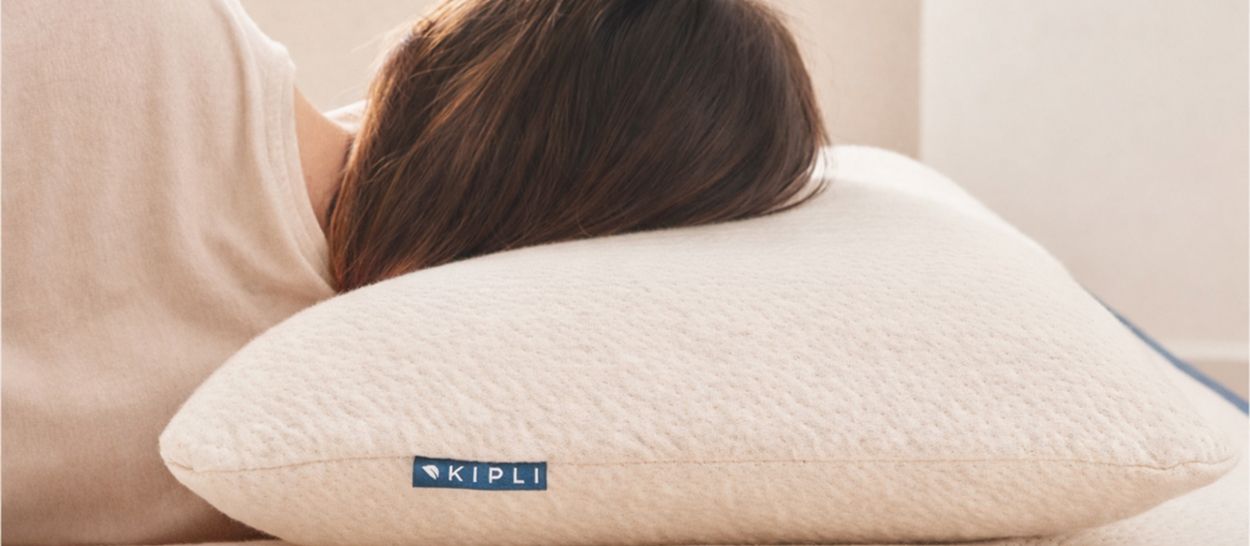
Your sleeping position is the most important factor in choosing the right pillow—even more so than your body type. To better understand good and bad sleeping positions, check out our dedicated guide.
Sleeper on their back
When lying on your back, your head should rest in the center of the pillow, and the small of your neck should be supported without being forced upward. A pillow that is too thick causes excessive bending of the neck. A pillow that is too flat leaves the small of your neck unsupported. The ideal pillow is moderately thick (10 cm) with medium firmness, and its center is slightly softer than the edges.The Kipli ergonomic pillow is designed specifically to meet this need. Its differentiated contours naturally conform to the cervical region of back sleepers. For more information, see the best sleeping position.
Side Sleeper
When sleeping on your side, the space between your shoulder and head is significant. The pillow must fill this gap so that the cervical spine remains in alignment with the rest of the spine. The ideal pillow is thicker (12 to 13 cm) with a high level of firmness that does not sag under the weight of your head.The Kipli natural latex pillow, with denser edges than the center, is designed for this body type. For those with broader shoulders, the 55x55 cm square model offers a more generous support surface. Find all our tips in our guide, “4 Body Types, 4 Solutions.”
Sleeping on one's stomach
C'est la position pour laquelle un oreiller en latex naturel classique est le moins adapté. Sa densité et son épaisseur forcent une rotation excessive du cou, créant des tensions cervicales après quelques heures. Si vous dormez sur le ventre, deux options s'offrent à vous : un oreiller très plat et souple l'oreiller naturel Tencel Kipli (accueil mi-ferme) peut convenir ou l'absence d'oreiller sous la tête. Notre article sur est-ce recommandé de dormir sans oreiller explore cette alternative. Consultez aussi comment choisir un oreiller plat.
Neck pain or chronic tension
Selon Santé publique France, 30% des adultes souffrent de douleurs cervicales chroniques et dans la majorité des cas, l'oreiller fait partie du problème. Le latex naturel, grâce à son élasticité et à sa géométrie différenciée, aide à maintenir la nuque dans une position neutre sans créer de point de pression. Pour ce profil, consultez quel oreiller contre les douleurs cervicales, comment choisir un oreiller cervical.
People with allergies
Free of chemical treatments and naturally resistant to dust mites and fungi, natural latex is one of the healthiest pillow options for a sleep environment. Eco-Institut certification guarantees the absence of VOCs and chemical odors. Paired with a washable organic cotton cover and a suitable pillow protector, it’s the best choice for people with allergies or asthma. To enhance this protection, pay attention to your entire bedding set: check out our best practices for a restful night’s sleep.
For children (ages 2 to 10)
L'oreiller enfant en latex naturel Kipli dimensions 30x50x5,5 cm, densité 55 kg/m³, certifié OEKO-TEX® STANDARD 100 et Eco-Institut, adapté aux enfants de 2 à 10 ans offre le même soutien que les modèles adultes dans un format proportionnel. Après 10 ans, le passage au modèle adulte standard est recommandé. Notre guide sur comment choisir un oreiller pour enfant détaille les critères de sélection selon l'âge.
Material Comparison
Comparison with Other Types of Pillows
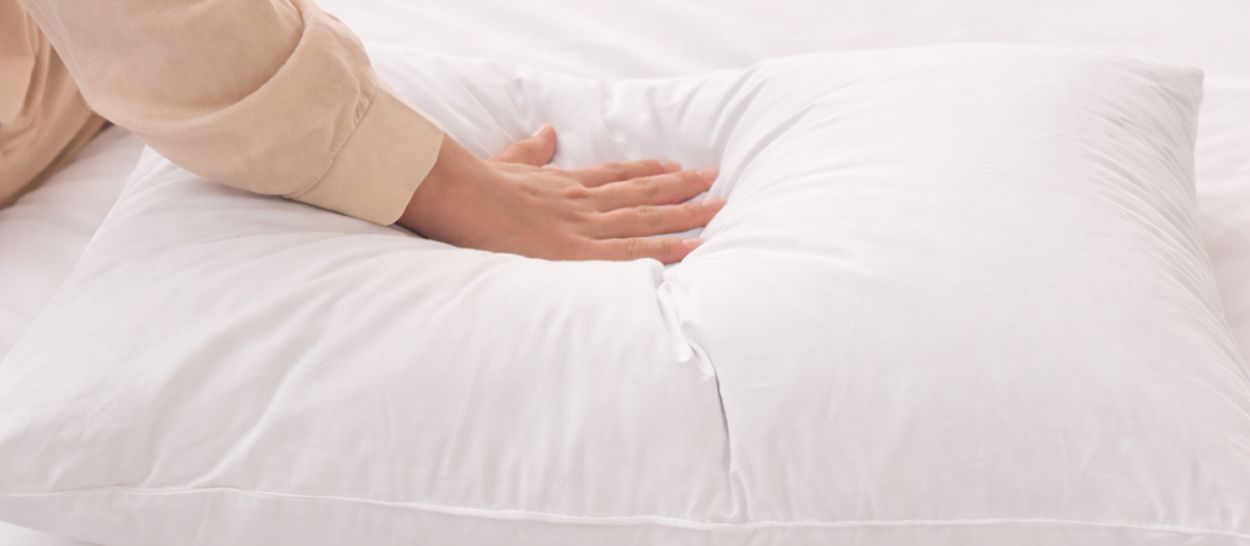
Natural Latex vs. Memory Foam (Polyurethane)
Memory foam reacts to body heat and “remembers” the shape of your head, hence its name. However, it retains more heat, slows down changes in position, and is made from polyurethane. It also has a shorter lifespan. Latex offers a more dynamic and breathable feel. Our guide, “Natural Latex vs. Memory Foam, ” and our article, “Should You Choose a Memory Foam Pillow?” compare the two materials in detail.
Natural Latex vs. Feathers and Down
Un oreiller en plumes est douillet et moelleux sa légèreté est incomparable. Mais il s'affaisse rapidement, offre peu de soutien cervical, et peut poser problème pour les personnes allergiques. L'oreiller en plumes et duvet Kipli fabriqué en France dans le Mans par un atelier spécialisé depuis 1850, housse en percale de coton biologique, garnissage en duvet et plumettes recyclés, accueil mi-ferme 7/10 convient aux dormeurs qui cherchent avant tout le confort enveloppant. Notre guide quand faut-il choisir un oreiller en plume clarifie les cas où ce choix est pertinent.
Natural Latex vs. Plant-Based Tencel Filling
L'oreiller naturel Tencel Kipli garnissage en fibre de pulpes de bois Tencel et polyester recyclé, fabrication française en Auvergne dans un atelier expert depuis 1870, accueil mi-ferme offre une sensation de nuage douillette. Il convient aux dormeurs légers ou sur le ventre qui souhaitent une alternative naturelle sans le soutien dense du latex. Si vous hésitez entre plusieurs modèles, notre guide quel oreiller choisir vous aidera à trancher. Vous pouvez aussi consulter traversin ou oreiller : comment choisir.
Interview
Care and Durability of Natural Latex Pillows
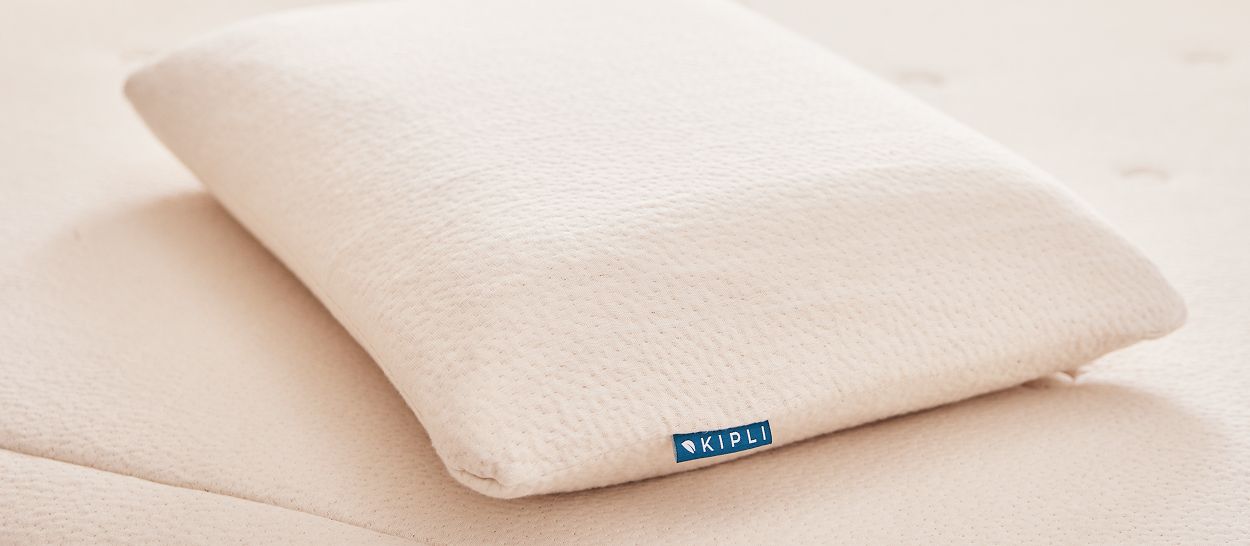
- The cover, made of organic cotton and Tencel, is removable and machine-washable at 30°C; air-dry. This is the part that requires the most regular maintenance—ideally every two months. Always check the instructions on your model’s product page.
- The latex core should never be washed with water. To care for it, air it out regularly, keeping it away from any direct heat sources or prolonged exposure to sunlight, which can damage the structure of natural rubber over time.
- A washable organic cotton pillow protector helps prevent moisture and dust from accumulating directly on the pillowcase and significantly extends the life of the entire set.
- The lifespan of a high-quality natural latex pillow is generally between 8 and 10 years, compared to 2 to 4 years for most synthetic pillows. The Kipli warranty covers manufacturing defects for 2 years.
For comprehensive advice on caring for your bedding, our guide on when and how to wash your pillow, our article on the 3 common mistakes that damage bedding, and our guide on caring for your bedding cover all the best practices to follow.
Kipli, of course.