

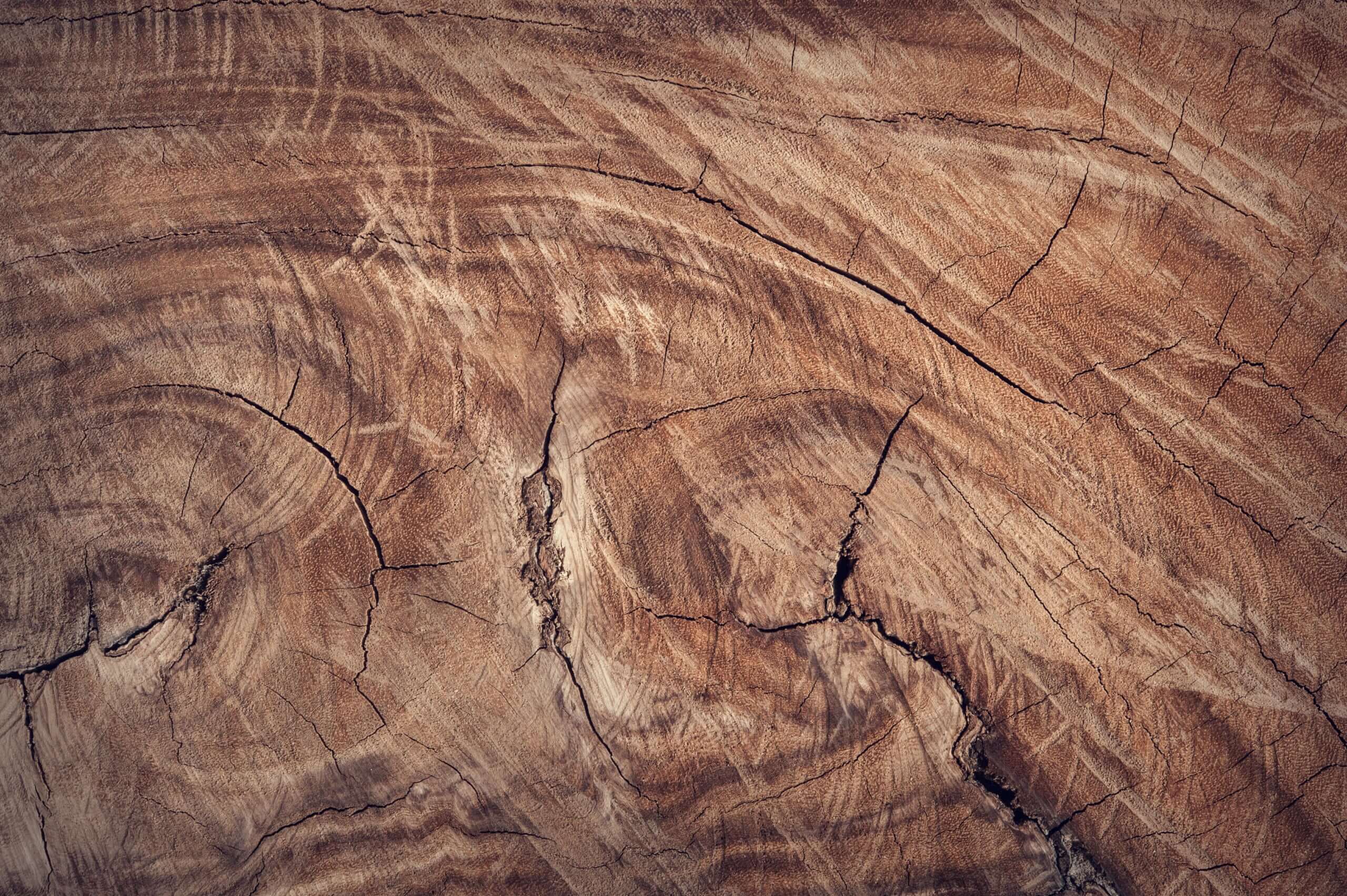
Wood is a ubiquitous material in our interiors, both in construction and in furniture. It is used in all kinds of furniture—from tables and chairs to beds and walk-in closets... It is praised for its many qualities, but also because it can be transformed in so many ways.
The diversity of trees on our planet allows us to offer a wide variety of wood types. When processed by hand and left as natural as possible, it becomes a high-quality piece with a rustic look.
Wood is a noble raw material that everyone is familiar with—at least in appearance—but its production holds many surprises. In this article, we discuss the different types of wood and their quality, as well as how they are processed.
I. A wide variety of woods with unique characteristics
A. Hardwoods
Hardwoods are the most common type of tree in the region, accounting for two-thirds of France's forests. This abundant resource is used in the construction of frames and furniture because these species are known for their high-quality properties in the construction industry.
Among the most commonly used woods in this category is oak, which is the most widespread and best-known tree in France—and even abroad (see the article “The Timber Market”). It is a light-colored, hard, heavy, and extremely sturdy wood. It is used for building interior and exterior structures and for carpentry.
Did you know?
To rebuild the framework of Notre-Dame Cathedral in Paris following the 2019 fire, 1,000 oak trees were carefully selected from across France. The framework was originally built in the 13th century—a testament to the strength and durability of this wood.
Beech is the second most common type of wood in France. It has a uniform structure and is used primarily in furniture making. Unlike oak, it is a very popular wood for interior use because of its fine grain.
Another widely used hardwood is poplar. It is a lightweight, soft wood, but very strong. It is mainly used in the manufacture of plywood (see the next point).
Within this category of hardwoods, we can also find chestnut, ash, cherry, and walnut, just to name a few.

B. Softwoods or conifers
Softwoods account for one-third of France's forests. Widely used in construction, plywood, and fiberboard, softwoods are more economical and easier to work with. They also grow quickly, but are less dense than hardwoods, which is their main difference.
As mentioned earlier, conifers are the best known, such as spruce, which is found in mountainous regions and is used as a Christmas tree. It is a soft, uniform, very lightweight wood, and its price is quite low.
There is also Scots pine, which is widely used, abundant, and easy to work with. It is hard and dense, and its color ranges from light yellow to reddish brown.
Finally, among the other softwoods is pine, which has similar qualities to the trees we mentioned earlier, since it is a soft, inexpensive, abundant wood that is widely used in construction as well as in carpentry. Other well-known conifers include Douglas fir, larch, and maritime pine.
There is a wide variety of trees that can sometimes be confused with one another, since some look very similar. However, certain species are more prevalent than others in specific areas. To provide a clearer and more general overview, there is a classification system divided into four categories. Each category includes types of wood based on their density, ranging from the lightest to the hardest:
Class 1 or A: This refers to light woods such as poplar, pine, and spruce
Class 2 or B: Applies to fine furniture woods such as walnut, birch, or teak
Class 3 or C: These are very solid woods, including oak, beech, ash, and acacia.
Class 4 or D: includes the most durable woods, such as dark acacia, cedar, and wenge
Wood Quality
We’ve talked about density as a way to classify types of wood, but did you know that growth rate is also important? The slower a tree grows, the stronger it is. This is usually the case with hardwoods. Softwoods, on the other hand, are less durable because they grow faster.
But there are other factors to consider when it comes to wood quality, such as growing conditions and the time of harvest. Even the lunar cycle plays a role, as it influences water circulation in forests.(1)
It is also possible to classify types of wood by color, but there is no "official" classification for this.
Once cut, wood is processed for many different uses depending on its properties and the specific requirements. Although wood is considered a healthy material, it may contain toxic substances once the processing is complete. It all depends on how it is used.
II. Wood Processing: Inconsistent Quality
Wood can be processed in many different ways, resulting in various qualities and finishes. Depending on the type of board used, the price and durability may vary. Now, we will focus on the types used in furniture manufacturing.
A. Plywood
Plywood is made of layers of wood glued together. The thickness of the panel varies depending on the number of layers and the thickness of the wood veneers used.
The most commonly used species in this process is poplar. The way the plywood is designed ensures that it is uniform, water- and fire-resistant, as well as lightweight and versatile.
Unlike raw wood, plywood is not affected by moisture or temperature changes.
It is quite environmentally friendly, since the types of wood used to make it come mainly from sustainably managed forests (poplar, pine, beech, etc.). In addition, the production of plywood consumes little energy.
However, we must not forget that glue is used to bond the wood veneers. This is not insignificant in terms of VOC emissions. Fortunately, there are natural, water-based glues available.
A little history...
The method of using plywood panels is believed to have been used as early as ancient Egypt, as well as in ancient Rome, where it was used to make shields. During World War II, because plywood is a lightweight and stable material, it was used in the aerospace industry. (2)
B - Laminating - Gluing
Glued laminated timber (GLT) consists of solid wood strips glued together along the grain—that is, across or along the length—with a thickness ranging from 33 to 45 mm. This allows for very long pieces, several meters in length if necessary.
Glued laminated timber is a good alternative to solid wood, which we will discuss later (it is also considered “solid wood” in carpentry). It is also very popular in the furniture industry because of its high resistance to warping, which is even greater than that of solid wood.
The most commonly used types of wood for producing this material are spruce, oak, beech, and Scots pine.
From an aesthetic standpoint, the interlocking planks are visible. This unique appearance should be appreciated. On the other hand, it is important to ensure that the laminated wood is installed by professionals who use appropriate, non-toxic products. Poorly glued planks can lead to problems with mold and insects.
1. Particleboard
It is a mixture of wood chips, sawdust, and other recycled plant waste that is compressed at very high temperatures and then bonded together. Synthetic or natural resin is used for this purpose. Its thickness ranges from 3 to 50 mm. About 80% of cabinetry is made of particleboard. It can be found absolutely everywhere.
It is very inexpensive, soft, and therefore easy to pierce. But it must be handled with care to prevent it from breaking.
It is not very durable and does not hold up well under heavy loads. It is also important to find out what type of binder is used, as it may be harmful to your health—such as formaldehyde. (See the article on indoor air pollution.)
Not very attractive, it is used primarily for the less visible parts of the furniture.
2. MDF (medium-density fiberboard)
MDF is a particleboard made from hardwood or softwood fibers.
It is very smooth and uniform, since it lacks the roughness of raw wood. It is a very durable material because it is unlikely to break when cut, and it is largely unaffected by moisture and temperature changes.
Popular for its low price, it's easy to work with—that is, to paint, varnish, saw, sand, etc.
However, just like particleboard, MDF must be drilled carefully to prevent it from splitting.
One of its drawbacks is that it scratches quite easily. However, it is mainly used for shelves in cabinets and dressers. Finally, MDF also contains formaldehyde, which is a problem for indoor air quality—and a concern for DIY enthusiasts who are exposed to toxic dust. That’s why it’s important to wear a mask when working with this material.
3. Melamine
Melamine is a finish applied to particleboard or MDF panels. It consists of a decorative film impregnated with a heat-activated adhesive resin (melamine-formaldehyde). The panel is coated with melamine and is used for furniture. Thanks to its coating, it is easier to clean than other panels. It offers many possibilities for customizing furniture.
However, in this case , formaldehyde is also present, making it a source of indoor pollution. While practical and economical, unfortunately, using this type of panel is not healthy.

C. Solid wood
Solid wood furniture is made by working with raw wood, preserving its natural qualities. It is the least processed type of wood. It is authentic and timeless. Its durability makes it a fine, high-value piece. This is reflected in its price, which is quite high.
Its uniqueness and durability make it a luxury item that can be resold on the secondhand market or passed down from generation to generation.
It is a living material that changes over the course of the seasons, so its appearance may change after a few years. How this happens depends on the type of wood used, the humidity in the environment, the amount of light it is exposed to, and temperature fluctuations.
Just as there is a classification of wood types based on their density, there is also a classification based on wood's resistance to moisture:
- Class 1: Dry wood for indoor use. Moisture content less than 20%.
- Class 2: Dry wood occasionally exposed to a moisture content greater than 20%.
- Class 3: Wood that is frequently exposed to moisture levels above 20%.
- Class 4: Wood that can withstand constant exposure to humidity levels above 20%.
- Class 5: A very durable wood that can come into contact with seawater.
Now that you know a little more about the types of wood panels used in the furniture industry, you can look at the furniture in your home and try to figure out what kind of wood it’s made of and how it was designed. But how can you make sense of all these factors and equip yourself properly to make the most of the wood’s qualities?
III - Criteria for Choosing a Piece of Furniture
You already have a lot of information about the different types of wood and how they can be worked (although we haven't covered everything).
Our goal is to raise awareness about the fact that every purchase has an impact—whether on health, the environment, ethics, or all three at once. We recommend that you focus on sustainable and healthy products. To do so, you should consider several criteria:
A. Strength
All types of wood have interesting qualities, but they aren’t always fully appreciated. A simple rule of thumb: the less the material has been processed, treated, or painted, the more valuable it is. It’s often the lower-quality materials that require repeated processing and the use of additional products—which are often harmful.
For this reason—and if you can afford it— solid wood is the better choice. Its durability is beyond question, since we all have an example of a fairly old piece of family furniture that’s still in excellent condition.
If you can't afford to buy a new one, you can find one secondhand, as long as you're sure about your purchase.
Among the other types of wood available, glued laminated timber is recommended because it is high-quality and more affordable. Plywood is also a good alternative to glued laminated timber—provided that these woods have been processed by professionals using products that are as natural as possible.
B. Finishing Products
Almost all products are enhanced, transformed, or protected with finishes made from paint, varnish, glue, or wax. This is normal because these finishes are essential to the products' durability.
Unfortunately, these ingredients are very often sources of VOCs and, therefore, also of pollution. We recommend that, just as you would with a list of ingredients, you research the types of products used. Some are more toxic than others, while others are harmless (water-based natural products, for example).
Ask the manufacturers how their furniture is made. The more transparent the manufacturing process and the materials used are, the more reassuring it will be.
C. Origen
Another rule to keep in mind is the product’s origin. To do this, you need to identify the country of manufacture and prioritize short supply chains. As you may have noticed, France has no shortage of forests; in fact, its wood is highly prized in China and the United States, where it is purchased in large quantities (see the article: “The Furniture Market”). Knowledge of and craftsmanship with wood are recognized skills.
If you have the chance, choose companies that work with local artisans or directly with the artisans themselves.
This way, you can be sure you're getting furniture made with passion and of excellent quality.
D. Aesthetics
Last but not least, aesthetics. It’s only natural that the furniture you choose should be pleasing to the eye and harmonize with your home’s interior. If you like wood, then you probably appreciate its rustic, warm look. Pieces with a simple, understated design are a safe bet, and to keep from getting tired of them too quickly, you can enhance them with decorative accents without compromising their quality.
Light-colored woods are very popular because they fit in with the Nordic trend. In general, they’re easier to coordinate because the floors are usually light-colored as well. But this isn’t a hard-and-fast rule—mixing shades can create a very beautiful look.
We hope this article gives you the opportunity to learn more about woodworking and the incredible variety of wood. At KIPLI, wood is a very popular material because it meets all the criteria that are important to us: it ’ s healthy, sustainable, renewable, and timeless. That’s why some of our furniture is made exclusively from this natural material.
In this age of disposable products, we champion the enduring nature of products by working with materials in traditional and local ways.
Sources Cited
→ (1) Book: The Solid Life: Carpentry as an Ethic of Making
→ (2) http://www.lecontreplaque.com/le-contreplaque/histoire-dune-performance/