

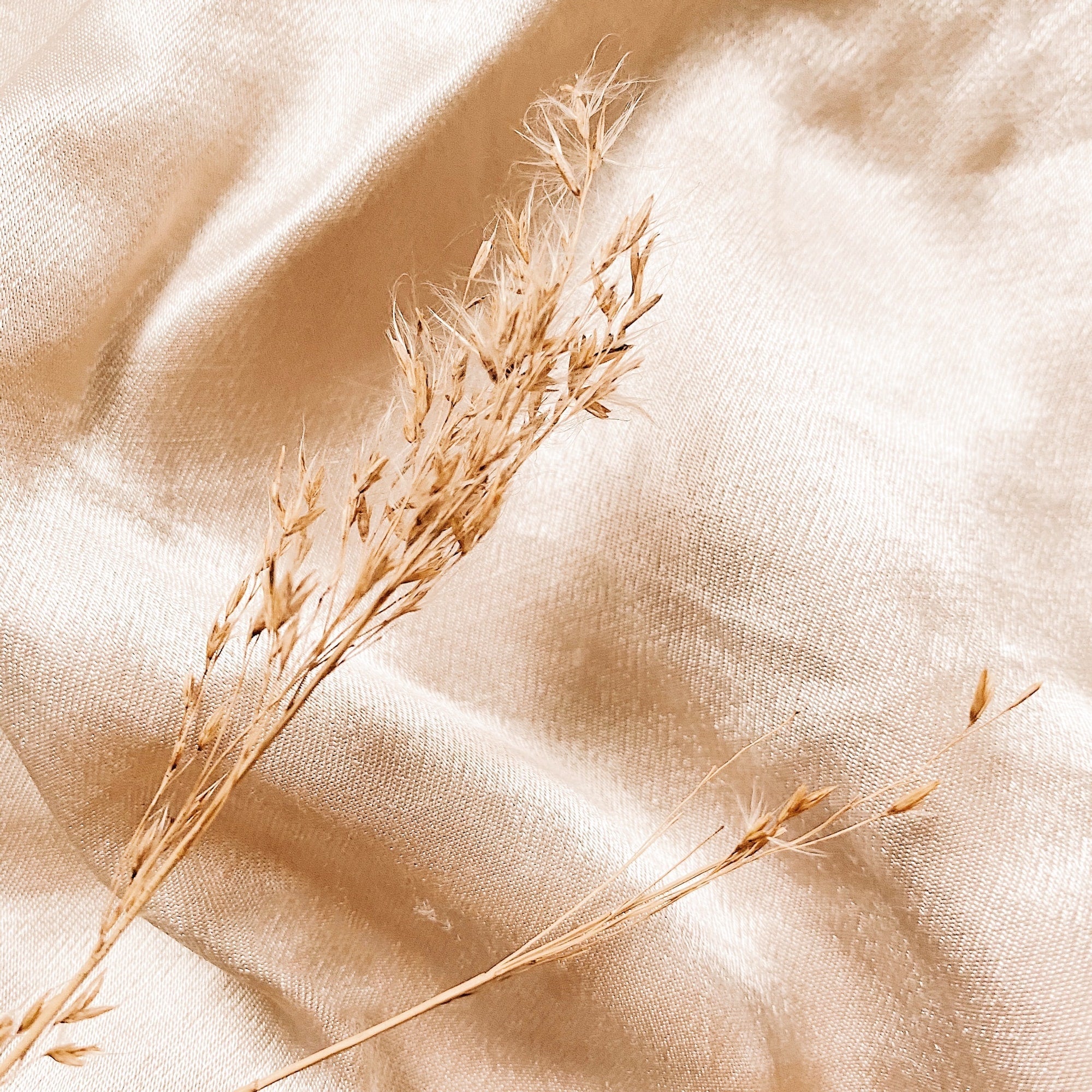
If there are materials that never go out of style, linen is obviously one of them. However, it remains underappreciated...Eco-friendly and durable, linen offers excellent breathability and strength. Unlike mosttextile fibers, it softens with age. In addition to these inherent qualities, it comes mainly from France and some neighboring countries (Belgium, the Netherlands). In fact, France is the leading producer of linen (accounting for nearly 80% of global production).

What is linen, and what is its history?
Flax, or Linum usitatissimum in Latin, is one of the so-calledbastplants. This means it has a soft stem and its fibers are located within the stem, where they are protected. Flax grows quickly, taking only about 100 days to mature.
Flax fibers are mainly used in the textile industry (primarily for fashion, but also for insulation), and the seeds are used to produce flaxseed oil, which is rich in omega-3 and omega-6 fatty acids.
The use of linen is nothing new: it is said to be the oldest textile in the world. The earliest traces of linen date back to 36,000 B.C. in a cave in western Georgia. Linen has played an important role in Egyptian history. Called “woven moonlight” (no less...), linen was sacred in the time of the pharaohs and a symbol of purity. There are depictions dating back 5,000 years that illustrate the linen harvesting process of that era.
A team of French researchers has studied flax fiber used as burial cloth.This fiber has retained all its properties nearly 4,000 yearslater... That's how durable it is.
The Gauls also grew flax: they used it for clothing and to make sails for their ships.
Charlemagne went a step further and developed thelinen tradebyincludingit in the Capitulario de Villis, which listed the plants that were to be cultivated in the gardens of the royal estate. In this way, he ensured the use of linen at court and in every household, providing them with the necessary supplies.
He was not the only monarch to appreciate linen... Louis XIV was also captivated by this fiber and used it in tapestries and clothing. And given his influence, linen quickly became widespread at the king’s court.
In the 19th century, the industrialization of the cotton industry had a negative impact on flax cultivation, which declined. This trend accelerated with the advent of synthetic textiles in the 20th century.
The linen industry experienced a revival in France between the two world wars and is gradually making a comeback.
Did you know?
The word "lino" comes from the Latin *linum*, which means "flax." This is further proof thatflax has always been a part of people's daily lives—and it intends to remain so.
The global history of linen is rich and far from over. Today, with the return to natural and local products, linen has its place.

Lino: Many Qualities Make It a Preferred Material
Linen has had its moments of glory throughout history, and for good reason.It’s a fiber that’s considered especially useful for summer clothing, particularly when it’s hot. But it’s much more than just a summer fabric—it’s a fabric that can be a part of our daily lives no matter the season or the occasion.
An ecological culture
The production of everyday consumer goods is under the spotlight from consumers. Aware of the environmental impact of cultivation, manufacturing, and distribution, manufacturers must increasingly find solutions to offereco-friendly products. The textile industry is by no means exempt from this.
Naturalness is in style and is being promoted everywhere.Tomeet the growing demands for sustainable production methods, linen meets all the requirements.
First of all, it is grown mainly in France (Normandy, Picardy), Belgium, and the Netherlands. This is a godsend because the benefits don't stop there.
It is an annual plant that thrives in a temperate climate. It is planted between March and April and blooms in June.
It is a plant that requires very little water.Infact, the rain from the northern climate is more than enough. It requires almost no watering, and pesticides or fertilizers are not necessary for it to grow well.
In addition, as mentioned earlier, the entire plant is used. Nothing is thrown away. Its cultivation does not generate waste: the byproducts are used in paper manufacturing or to create mulch.
The Stages of Linen Production
1. Harvest:Startingin July, after flowering in June, the flax is harvested to produce a high-quality crop. This process is carried out using specialized machinery.
2. Retting:Retting takes place inAugust to free the fiber from the stem. Thanks to the ambient humidity, bacteria will break down the outer layer of the stem.
3. Espadillado:This involvesseparating the flax fibers from the bast by mechanical means. It is during this stage that the flax seeds are recovered.
4. Combing:Thelong fibers are combed with fine-toothed combs. This step removes any remaining straw and other debris. The fibers are then aligned parallel to one another.
5. Spinning:There aretwo processes: wet spinning (for linen or clothing) and dry spinning (for furniture and other products). The fibers are then transformed into slivers.
Unfortunately, part of the linen production is shipped to China to be made into clothing. Not only is the carbon footprint disastrous, but Chinese factories also use dyes and chemical treatments. As a result, linen’s eco-friendly qualities are completely lost.
That is why it is important to supportEuropean linen—grown and processed locally—to take advantage of unique expertise that yields high-quality results with an appealing aesthetic.

Technical and Aesthetic Qualities of Linen
Linen is a breathable, temperature-regulating fabric.It retainsheat in the winter and allows air to circulate, providing a cool feeling in the summer.
In addition, linen is the fabric with the highest absorbency. It can absorb nearly 20% of moisture and still feel dry.
Thanks to these qualities, linen is also naturally antibacterial and hypoallergenic, since it dries very quickly and prevents moisture from building up—with all the associated issues.
History has shown thatlinen is very durable.It isa fiber that lasts for years without deteriorating (provided it is of good quality). A linen fabric lasts twice as long as a cotton one. It also has the advantage ofnot losing its shape over time, nor does it have defects such as the pilling that occurs with cotton.
Linenmayfeel rough at first, but it becomes softer with each wash.Again, this is a sign of great durability, since not only is it strong, but its texture improves with each wash.
Caring for linen is very simple; if it is thick and of good quality, it can be machine-washed at up to 60 degrees. Otherwise, washing it at 40 degrees is sufficient.
Flax fiber has a unique aesthetic appeal. Throughout history, it has captivated people and was prized by the Egyptians for clothing, decoration, and sacred purposes.
It is atimelessmaterialthat is both elegant and rustic. Its appearance—sometimes wrinkled—evokes a warm and reassuring sense of authenticity.
It isn't smooth, but its unevenness gives it the many qualities mentioned above.
Linen has everything going for it: it’seco-friendly, strong, durable, hypoallergenic, and has an inimitable style.It comesfrom France and neighboring countries, but it isn’t appreciated enough.