


Choosing the right size duvet is an often-overlooked detail, but one that’s essential for ensuring comfortable nights and restful sleep. We tend to focus first on the material, weight, or the room’s decor, and we choose the size almost automatically, based on the mattress size. However, a duvet that’s too small slips off, leaves your shoulders exposed, and creates cold spots. A duvet that’s too large drags on the floor, collects dust, and loses its thermal efficiency.
In this guide, we'll walk you through the process step by step to help you choose the perfect model—tailored to every bed size—for a perfectly snug and harmonious sleeping experience in your bedroom.
Why the comforter Should Be Wider Than the Mattress
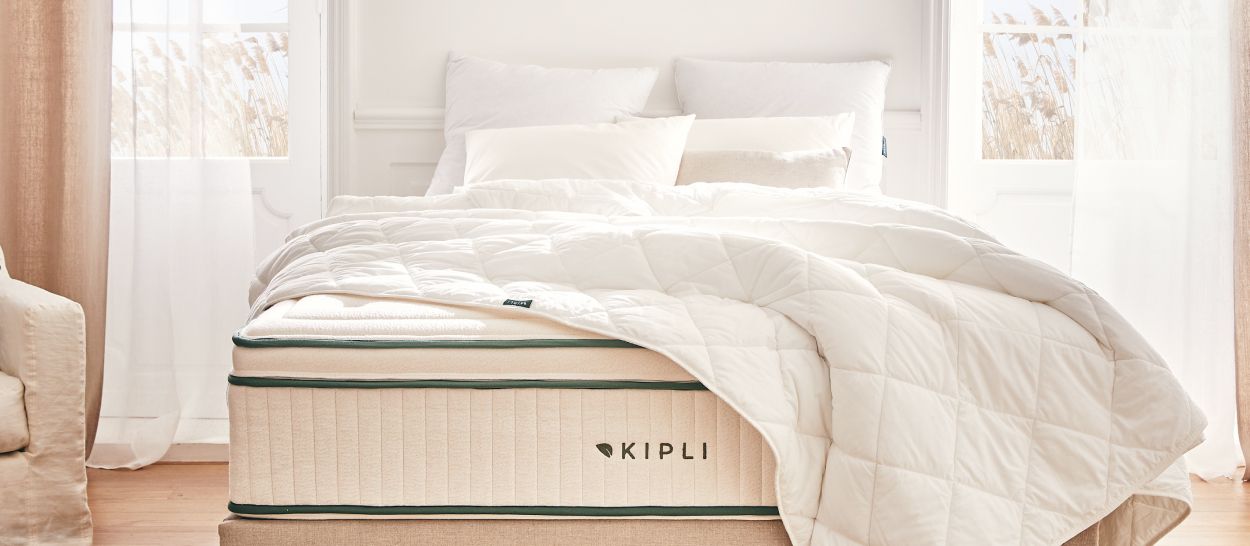
The golden rule—which is often counterintuitive—is simple: a comforter should always extend beyond the width of the mattress. It’s not just a matter of decor; it’s primarily about thermal comfort.
The comforter acts as an insulating layer. To trap heat and prevent drafts, it should hang down on each side of the bed by at least 25 to 30 centimeters—this is known as the overhang or drape. If it hangs down less than that, the comforter will lift at the slightest movement, allowing cold air to pass between the mattress and the sheet.
On a shared bed, this issue is even more critical. Each person naturally pulls the comforter toward themselves during the night. On a 140-cm bed, a 140x200-cm comforter is too small for two people: this is the most common mistake people make when choosing bedding.
The thickness of the mattress also plays a role. A thick mattress requires more duvet on the sides than a thinner model; failing to take this into account reduces the effective overhang by 7 to 10 centimeters on each side.
A Good Habit Before Buying: Measure the length and width of your box spring or mattress, note the mattress thickness, and then use the formula below. If you already have a duvet cover, measure it: the duvet you choose should have exactly the same dimensions.
How to Calculate the Right Duvet Size in Centimeters

To choose the right width, here's a handy guide:
(Duvet width - mattress width) / 2 = overhang on each side
Example: For a 140-cm bed with a 240x220-cm comforter: (240 - 140) / 2 = 50 centimeters of overhang on each side. This is ideal for two sleepers, even the most restless ones.
For length, allow for at least 20 centimeters of overhang at the foot of the bed. If your mattress is 200 cm long, choose a comforter that is at least 220 cm long. Kipli models measuring 240 or 260 cm in length offer up to 40 centimeters of overhang at the foot of the bed.
Summary Chart: What Duvet Size for What Bed Size?
Bed size: 80x190 / 90x190 cm. Recommended comforter size: 140x200 cm. Generous overhang: 155x220 cm.
Bed size: 80x200 / 90x200 cm. Recommended comforter size: 155x200 cm. Generous overhang: 155x220 cm.
Bed size: 140x190 / 140x200 cm (single). Recommended comforter size: 200x200 cm. Generous overhang: 240x220 cm.
Bed size: 140x190 / 140x200 cm (for 2 people). Recommended comforter size: 240x220 cm. Generous overhang: 260x240 cm.
Bed size: 160x200 cm. Recommended comforter size: 240x220 cm. Generous overhang: 260x240 cm.
Bed size: 180x200 cm. Recommended duvet size: 260x240 cm. Generous overhang: 260x240 cm.
Factors to Consider Beyond Bed Size

Sleeping Style
Do you sleep alone or with a partner? This is the main factor in choosing the width. A single sleeper can get by with a narrower model, while a couple needs extra width. If one of you is sensitive to the cold or moves around a lot, choose a size larger than the standard recommendation.
For a child's bedroom, a 140x200 cm or 155x220 cm comforter is sufficient: it's easy to handle and is a great alternative to a sleep sack once the child gets older.
Padding, weight, and thickness
Denser filling ensures better loft and minimizes shifting during the night. Down and feather models drape elegantly. Lyocell Tencel models are lighter but retain their volume over time without losing their shape.
The total thickness of the bedding—mattress, box spring, and sheets—must be taken into account. A thick mattress reduces the effective drop. If you often add a bedspread, choose a slightly less dense filling to prevent the whole set from becoming too heavy.
The room's aesthetic and the drapery
A well-proportioned comforter enhances the bedroom’s decor. In a minimalist interior, with a solid wood bed, organic cotton bedding, and beautiful sheets, a comforter with a generous drape creates a visual balance that contributes to the room’s harmony. Conversely, a comforter that’s too small reveals the bed frame and disrupts the bed’s silhouette.
Kipli duvet covers, made from organic cotton, washed linen, or satin, are available in all sizes to complement your bedding seamlessly. The Kipli line of natural latex pillows is perfectly compatible with the pillowcases in the collection.
Duvet sizes available at Kipli
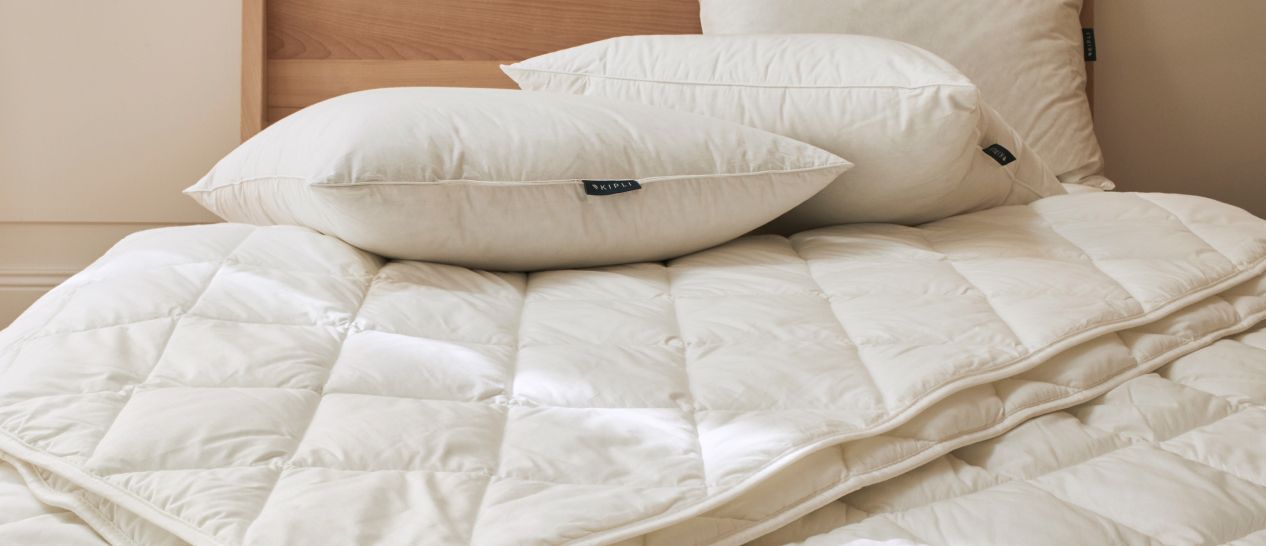
The all-season comforter made of Lyocell Tencel and organic cotton offers the most comprehensive size selection: 135x200, 140x200, 155x200, 155x220, 200x200, 225x220, 240x220, and 260x240 cm. Its Tencel filling ensures lightness and optimal moisture management throughout the night. Recommended for cool nights and normally heated bedrooms.
The summer comforter made of Lyocell Tencel and organic cotton: 140x200, 155x220, 200x200, 240x220, and 260x240 cm. Lightweight, perfect for keeping you covered without making you feel stuffy on hot nights.
The 4-season comforter (temperate-weather comforter + summer comforter attached with buttons): 140x200, 200x200, 225x220, 240x220, and 260x240 cm. Three warmth levels in a single model.
The recycled down and feather comforter, made in France: 140x200, 200x200, 220x240, and 240x260 cm. Filled with recycled feathers and down, with an organic cotton cover. Its natural filling gives it a denser drape, appreciated by those who like to feel well-covered.
Should you choose a comforter that’s the same size as its duvet cover? Yes, without exception. The comforter must match the duvet cover’s size exactly. A 240x220 cm comforter in a 260x240 cm duvet cover will shift around inside and create wrinkles. Kipli’s organic cotton duvet covers are available in the same sizes as the comforters in the line.
Common Mistakes to Avoid
Choosing a comforter that's the same size as the mattress: that's the most common mistake. Without overhang, the comforter slips and doesn't cover the bed properly.
Don't forget to account for the mattress thickness: a thick mattress reduces the effective drop by several centimeters on each side. Take this into account in your calculation.
Relying on your current duvet cover without measuring it: many duvet covers tend to be too small. Take the time to measure before choosing your duvet.
Let the comforter touch the floor: a comforter that drags on the carpet or hardwood floor gradually collects dust and loses its thermal properties.
Choosing a duvet that’s too heavy for its cover: Some thick cotton covers reduce the duvet’s breathability. Pair a thin percale or washed linen cover with a Tencel duvet to preserve the bedding’s thermoregulatory properties.
Tips for Extending the Life of Your Duvet
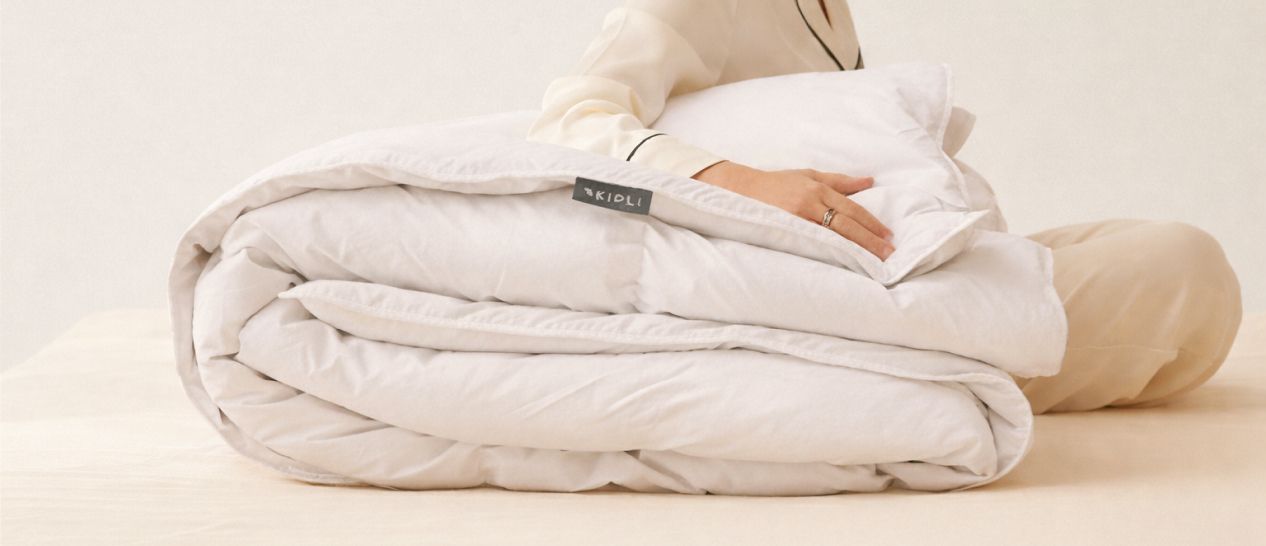
Always use a duvet cover: it protects the filling, reduces the need for frequent washing, and extends the life of the natural filling.
Air out your comforter every morning: leave it unfolded for a few minutes before making the bed to let moisture escape and keep the filling fluffy.
Washing: Kipli Tencel comforters are machine washable at 30°C on the delicate cycle. They can be tumble dried at up to 60°C.
Restoring volume: Put the comforter in the dryer on a low heat setting with two tennis balls to restore lightness and thickness to a comforter that has lost its volume.
Choosing the Right Duvet
Choosing the right size for your comforter ensures a good night’s sleep and comfort throughout the night. The rule to remember: it should always be wider than the mattress, with an overhang of 25 to 50 centimeters on each side, depending on whether you sleep alone or with a partner. In terms of length, make sure it’s at least 20 centimeters longer than your mattress.
- Single bed: 140x200 cm or 155x220 cm, depending on the length of the bed
- Shared double bed: 240x220 cm for balance, 260x240 cm for a generous drape
- 180-cm bed: 260x240 cm—no question about it
Check out the entire Kipli line of comforters and duvet covers in the same sizes.
Kipli, of course.
Written by the Kipli team, specialists in natural home furnishings since 2018. Our advice is based on our product expertise and customer feedback to ensure you enjoy peaceful and restful nights.