

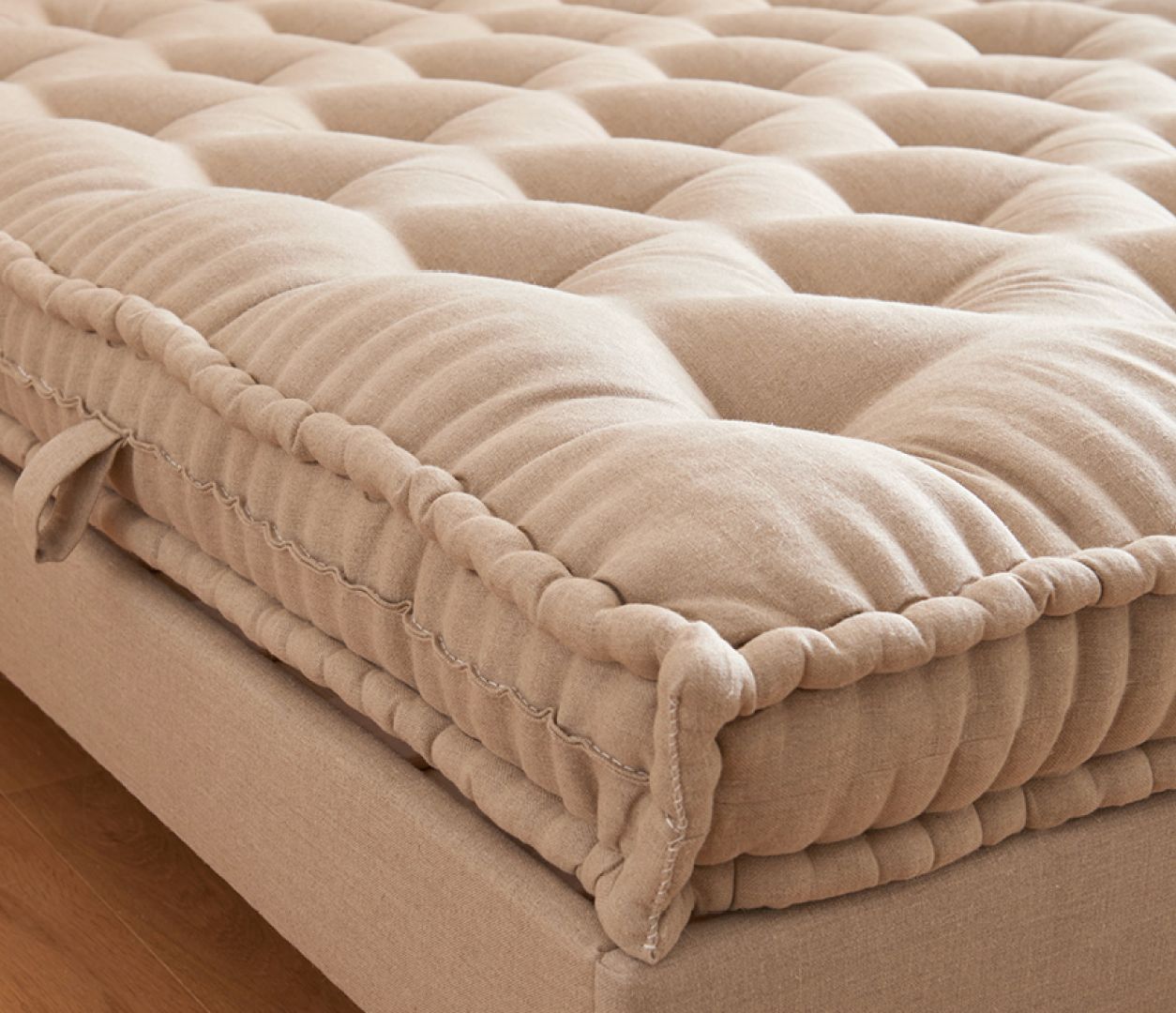
In the world of bedding, the mattress and its box spring form a set that must be properly matched based on the characteristics of each of these two components. This is essential for comfort and sleep quality.
Not all types of box springs are suitable for all mattress models, so it’s possible—whether by accident or due to a lack of information on the subject—to compromise a mattress’s comfort by pairing it with an unsuitable box spring, which is not the optimal solution. Given the significant cost of these products, it’s worth seeking out the best possible combination to ensure that every night is spent resting in comfortable and healthy bedding.
That's why we're offering this guide to help you figure out how to find the ideal box spring for a wool mattress.

Features of Wool Mattresses
To fully understand the unique characteristics of wool mattresses, it is essential to begin by describing the material that makes up almost all of them: natural wool.
-
Wool: A Natural Material with Unique Properties
Wool, regardless of its intended use, is a natural and renewable material obtained from shearing sheep and ewes. However, in the field we are concerned with—namely, bedding—not all types of wool used have the same origin or the same properties.
The three main types of wool are:
- 100% natural wool, selected during shearing from the flanks and backs of the animals and washed only in hot water before being air-dried (which allows it to retain all its natural properties);
- pure sheep's wool, with added synthetic fibers, to make it machine-washable and compatible with antibacterial treatments;
- sheep's wool, a product harvested from dead animals, then washed and treated with chemicals, which strips it of the benefits of 100% natural wool.
As is easy to see, “wool” is a generic term that encompasses a wide range of variations, both in terms of how it is obtained and the treatments it undergoes.
-
How a Wool Mattress Is Made
Mattresses made with 100% natural wool are rare products, and their production appears to be limited to artisan upholsterers, who hand-stuff the mattresses. This manual work by the upholsterer allows them to adjust the firmness of the filling depending on whether the customer prefers a firmer or, conversely, a softer mattress.
Most wool mattresses include horsehair—another natural material—to help maintain the mattress’s softness, which can become too firm over time as the wool settles with each night’s use. A handcrafted wool mattress can last for many, many years, provided it is properly cared for, turned regularly, and refurbished every 5 years—ideally with a new cover.
In any case, it’s important to keep in mind that all wool mattresses are very heavy; a standard double mattress measuring 140 x 90 cm can easily weigh more than 25 kilograms. The heavy weight of wool mattresses must therefore be taken into account at the time of purchase, whether you plan to transport it yourself or have it delivered if you’re buying online.
-
Pros and Cons of Wool Mattresses
The main quality associated with wool mattresses is their excellent temperature-regulating ability. In other words, a wool mattress stays cool in the summer and warm in the winter. It effectively absorbs moisture caused by the climate or by perspiration from the user’s body while sleeping. It is also hypoallergenic, but may not be suitable for people concerned about dust mites, which can only be prevented through rigorous and very frequent maintenance.
The natural nature of a wool mattress also makes it environmentally friendly, since it is easily recyclable and, if made from 100% natural wool, is produced using renewable materials and no chemicals.
When it comes to comfort, there’s something for everyone in terms of firmness, since you can choose between a firmer mattress and a softer one. However, to enjoy maximum sleeping comfort, it’s important to choose the most suitable type of box spring —a key point that we’ll discuss in more detail later on this page.

Which bed frame is best for a wool mattress?
According to experts in the bedding industry, 70% of a bed’s comfort level is determined by the quality of the mattress, which means that the remaining 30% comes from the box spring. Therefore, finding the perfect match between a mattress and its box spring is essential for enjoying a comfortable bed that brings out the best in each component.
When it comes to a wool mattress, there are several options available to make the most of its inherent properties.
First and foremost is the choice of a slatted bed frame, which has long been the preferred choice of the French for supporting their mattresses and creating their bedding setup. The first point to emphasize is the structure of the slatted bed frame, which—thanks to the gaps between the wooden slats—perfectly complements the natural breathability of a wool mattress and enhances its comfort. The wooden slats—which can vary in stiffness or flexibility—should preferably be made of certified solid wood sourced from French forests.
Another interesting point is that a slatted bed base can be sold separately, but it can also be integrated into the bed frame, allowing you to purchase a complete bed in a single transaction.
Available in a classic version, the slatted bed base is also offered as an upholstered bed base, which means that the wooden frame—and possibly the slats—are covered with fabric. Here again, purchasing an upholstered slatted bed base can be part of a responsible, eco-friendly, and sustainable approach. To do so, simply choose a manufacturer that specifies the use of 100% natural fabrics, such as linen or organic cotton, to ensure you have healthy bedding free of adhesives or synthetic materials.
We recommend these other pages:
- What height of bed frame legs should I choose?
- Which bed slats should you choose?
- Which box spring should you choose for a latex mattress?
- Which box spring should you choose for a foam mattress?
- Which bed frame should you choose for a pocket-spring mattress?
- What kind of mattress should you choose for an electric bed?
- What kind of mattress should you choose for a storage bed?
- What kind of mattress should you choose for a slatted bed frame?
- What type of mattress should you choose for a slatted bed frame?
- What kind of mattress should you choose for a box spring?
- Which bed frame should you choose for a spring mattress?